Saturday, 26 December 2009

Could They All Be Cambodian Girls?


From the Google map the great temple of Banteay Chmar in north west Cambodia shows as a square block and to the east is the huge baray or lake, now mainly cultivated as rice paddies, with an island temple in the middle.

The only boat is too small so the only way is to walk it.

I boldly waded across the swamp, at first with my shorts on.

On the island there's a dry moat so there should be a temple here somewhere.

Now we've found part of the stone lining to the moat.

The first glimpse of stonework is really exciting.

And I foolishly try to climb the wall to get inside.

We find some really fine stonework and carvings.

And the Hulk takes some pics of us just for the record.


I met him on the internet as one does and we went off to Cambodia together looking for what he calls ‘his girls’.

He is totally focused in his quest, he cannot get enough of them and totally adores them, obsessively photographing each and every one. Given that at Angkor Wat alone, there are precisely 1,780 of these girls, that’s no small undertaking.

To him they are supremely beautiful, mysterious, bewitching, even though they are of course much older women and are carved in stone.

It had all happened like this.

Some time ago I’d posted a blog article called, “Thai School Girls Turned Apsara”, (16 March 2009), about the traditional dancing in our local Khmer temple at Sikoraphum in Surin province. This post included pictures of the temple’s very fine carvings of these ‘devata’ as they are called and in no time at all he’d got in touch. Soon we’d struck up a firm cyber friendship, as one sometimes can, and the emails were flying to and fro.

It’s strange how quickly you get to know someone just by exchanging emails but somehow I was finding it hard to remember his name. Was he Clark Kent or Kent Clark? Indiana somebody perhaps, but was it Thomas, Davis or Jones?

He was both scholar and publisher, an explorer across the ages, but could American parents really have named their son after a small county south of London that grows vegetables?

Kent Davis then foolishly allowed me to go with him on a great adventure to Cambodia, and he proved to be amazing company, tolerating me for what was a very memorable week indeed. He was unfailingly energetic and enthusiastic and, in the best possible way, irrepressibly American!

I’ve heard it said though, perish the thought, that Americans can on occasion suffer an irony deficit, especially about themselves. Kent however scoops the pool. He was always ready with a rapier sharp quip. He does irony in buckets and spades, often garnished with a world weary cynicism that can be hilariously funny. Together we boldly waded across a treacherous swamp to find and photograph the hidden temple on the island and he always kept me smiling.

We were way off the beaten track at Banteay Chmar, the deserted ancient Khmer complex in the north west of Cambodia. (See the blog article below.) We’d spent many hours that day out in the heat exploring this huge site and now I’m ready to drop.

‘There’s a mebon temple on an island in the baray a few miles away,’ says Kent, his eyes lighting up, ‘and I just have to see it in case there’s more devata there’.

‘How do we cross the baray though?’ I ask with no small hint of scepticism.

‘I’ve booked a boat and a guide. It’s easy,’ said Kent, brimming with optimism.

Mine was not to reason why and our driver eventually found the place where the boat was supposed to be waiting. We got out, scrambled up a dusty slope and there spread in front of us was a vast lake, spotted with rice paddies and in the blue distance an island covered in trees.

Then we found our boat. It was just a small dugout canoe, a bit wider than my thumbs and next to it in the water stood our guide. A cool looking Cambodian youth in jeans, his tee shirt bore the one word, “HULK”.

‘You don’t think we’re all going in that thing?’ I say, aghast. ‘It’s hardly big enough to take a tailor’s dummy, let alone you!’ Kent looks a little put out.

‘But it’s an amazing design… I love traditional boats,’ I add to lighten the mood. ‘Who made it and why the strange rounded bow?’

It turns out that Hulk himself had carved the dugout from a big tree and the bow was his own idea. It was, he says, inspired by the shape of the bombs the Americans had dropped on Cambodia in such dreadful numbers.

Kent no longer seems dismayed and grasps the nettle. ‘If we can’t go by boat, then we’ll have to walk,’ he says. ‘How deep’s the water?’ he asks the Hulk.

The Hulk stops smiling and indicates his armpits.

‘But it’s probably infested with leeches and scorpions, with water snakes, crocodiles, mines and mosquitoes,’ I mutter to no avail. Kent is now smiling encouragement.

Five minutes later I’m wading up to my armpits in deep mud, my shorts on my head, my camera, mobile, money, passport and dignity all at serious risk of a fall into the mire.

It’s heavy going but eventually we’re stepping ashore on the island where no tourist can have gone before and I have a soggy sense of anti-climax. It’s covered in trees and scrub and our guide has no idea where to find the temple, even if there is one. Have we got ourselves so wet and muddy for nothing?

Then we find what appears to be a dry moat of the kind that surrounds most ancient Khmer monuments and spot what is clearly the laterite lining of the moat. We persist for a few more minutes and soon discover some substantial stone work. There is a temple here after all so there must be some girls too. Kent’s getting excited.

We force our way through the undergrowth and we’re standing below a wall of vast stone blocks. The Hulk scrambles nimbly up it and I follow somewhat less nimbly, aware that he’s a third my age. More sensible to have a major accident near a world class hospital in Sukhumvit than stuck out here in the back of beyond.

Then I realize I can get into the temple by going round the wall rather than over the top of it. Kent is close behind me, his camera recording the stonework. And yes, there are some fine carvings and devata and we tear away the vegetation for a closer look and a photo or two.

Clearly this is an important site, the lake temple a holy of holies set on the island in the baray, a man made lake that had both spiritual significance for the Khmers and practical significance as a water source. When Kent later gave me a Google map, I could see how the ancient site of Banteay Chmar and the baray lie alongside each other and somehow it’s spellbinding. Everything is so overgrown that it’s difficult to see it on the ground but with the map all is crystal clear and its sheer scale is breathtaking.

That day was another great experience on a memorable trip and what’s more we’d found some girls. I’d flicked a deadly scorpion off Kent’s shoulder, there’d been plenty of male bonding and at the end of it all we came back for another beer. I was learning stuff too.

I was beginning to get an idea why Kent is so interested in the devata on the temples and in the current renaissance of classical dance since Cambodia’s darkest days. He told me of his publishing ventures (see www.datasia.us), and he posed the question to me, why is it that so many images of women dominate the monuments at Angkor? What is their significance and why are they all so very different?

Their poses differ, he pointed out, as does their clothing and head dress. Their body shapes vary from young, slim girls to older women with pucker marks around the navel who have clearly borne children. Their features again suggest that these are real individuals and not just mass images of mythical women.

Kent even plans to try to analyse their facial structures as their racial characteristics seem to differ widely. They could all be Cambodia girls but just as likely some are Chinese, some from Java or Thailand and from regions that paid tribute to the great kings at Angkor. (See www.devata.org.)

How fortunate I was that day, following Kent through deep, deep mud out to the mebon temple as he loudly hummed a repetitive Beach Boys theme. My bare legs were lacerated by the undergrowth, the mosquitoes had made a meal of me and my muscles ached for days afterwards.

But it was all worthwhile.

If it wasn’t for him, I’d have missed all of this, have stayed comfortably at home and to this day I’d still not know what a devata was.

Copyright Andrew Hicks The “Thai Girl” Blog December 2009

Saturday, 19 December 2009

The Lost Khmer City of Banteay Chmar


A figure guards the entrance to the temple at Banteay Chmar.

Modern politics intrudes on the timeless scene at the temples

The site was first mapped by the French and is extensive.

The Cambodian flag flies over the front entrance to the temple.

A collapsed section of the wall is being pieced together.

The stones are massive and it's all done by hand.

The work of reassembling the low reliefs on the wall is under way.

Khmer soldiers present severed heads to their masters.

As always the stonework is lavishly decorated with carvings.

In the extensive workshops, a smith uses a forge.

Peter and Kent explore the ruins.

Indiana Tucker almost bashes his head on the temple of doom.

Every turn finds a new chaos of ruins.


Angkor Wat in Cambodia, one of the greatest ancient temple sites in the world receives hundreds of thousands of foreign visitors a year. There are traffic jams around the sites and it’s hard not to feel oppressed by the sheer volume of tourists that now overwhelm the temples. After decades of political instability it is good for Cambodia that tourism has taken off so fast but there are risks. I was first there at Angkor nine years ago and it was very different indeed.

The whole experience of visiting the Khmer ruins has to some extent been spoiled as, visiting now in 2009, you’ve come at least ten years too late. However, there’s more to the Khmer kingdom than Angkor and Cambodia still offers some hidden surprises.

I’ve just come back from seeing the ancient temple at Banteay Chmar and it was a remarkable experience.

We crossed the border at Chong Jom in Thailand’s Surin province and drove in a hired 4x4 on dusty roads for an hour or two before coming to a poor little town. It was only different from the others we’d passed through because it had a tree lined moat on the other side of which you could see some extensive stone ruins. This was our objective, the ‘lost city’ of Banteay Chmar built by Jayavarman VII, Cambodia’s hyperactive builder of vast stone temples.

While this huge complex was first recorded by the French, its physical isolation, the civil wars in Cambodia and the cultural heritage existing at the centre of the Angkorian empire means that work on clearing the site was only started about eighteen months ago. For us arriving here at this early stage must thus be how it was when visitors came to Angkor many decades ago. Things may now move quite fast though and a well-attended conference in August 2009 discussing the management of the temple and the possibility of application for listing as a World Heritage Site has stimulated considerable interest.

Our first task was now to find somewhere to stay. There are no hotels as such in the town so our driver found us a ‘homestay’ down a dusty side street. There seemed to be a choice of two and ours offered three clean rooms in a well built local house.

As for lunch, there were no restaurants apparent either, though we found an eating place just opposite the entrance to the ruins, run by a pleasant couple who even spoke a little English.

Food sorted, it was time to enter the temple.

Passing a pair of stone figures and a sign recording the recent de-mining programme, we crossed the causeway over the moat and reached the walls of the city where the Cambodian flag was flying. To our left was a closed off site where workers were sorting out the scatter of fallen stones and rebuilding a section of the wall and gallery. On the walls all around the temple precinct are carved low reliefs similar to those on the Bayon temple at Angkor, showing an exotic array of characters and battles, both human and mythological. Warfare is ever present and one particularly grizzly relief shows the victors displaying the severed heads of the enemy.

Inside the walls was a world that time has forgotten, a chaotic tumble of massive blocks of stone, of standing ruins and shattered towers, all encroached upon by huge white trees and bathed in dappled light. The glory days of the temple were almost a millennium ago but there was now only a few hours before another day drew to its close. It’s size was astounding and we had it all to ourselves, a magical other world for us to discover and explore.

On arriving I’d seen on one of the site notices the name of John Sanday who I’d met on two earlier occasions when visiting Preah Khan at Angkor where he was directing restoration work on behalf of the World Monuments Fund. On producing his card from my wallet, we were immediately taken to his office on the edge of the town where he very graciously dropped the more important things he was doing and took us on a tour of the site.

It was fascinating to be taken round by someone of his knowledge and experience and to hear the story of how he had initiated this project, now working with the Global Heritage Fund. Within a very sort time he has cleared the site of all vegetation, has stabilized some of the more precarious structures and started building wooden walk ways over the fallen rocks as access is difficult and dangerous.

Having set up site buildings and workshops, including a forge, he has also focussed on the important task of training local staff. Two stone naga heads have been found in good condition at the front of the temple and he hopes to restore the platform to allow for dancing and other events. Most importantly the fallen stones from the low reliefs to the left of the entrance have been moved, numbered and laid out on the ground and progress is being made on rebuilding the wall.

Most exciting of all, he told us of the project to develop a computer software that could assist in solving the most difficult jig saw puzzle in the world. It’s supposed to work like this. Each stone would be suspended and a digital image taken of all its surfaces. When the stones for a section of wall have all been scanned, all you have to do is press control/alt/delete or whatever and hey presto the computer tells you exactly how the stones fit together. At least that’s how it’ll happen in an ideal world and it would be a significant breakthrough if so.

Even with the help of a thousand computers though, many a life time is needed to achieve much progress with this site. The scale of the ruins makes the prospect of restoration totally daunting, a truly herculean task, and all the king’s men could never possibly put it all back together again. Perhaps therefore they should not even try to do so.

There may be considerable political pressures to recreate the structures as they were for the benefit of tourists but this is always a questionable aim. Reconstructed Khmer monuments often look a bit of a mess. Far better in my view, to prevent further dilapidation but otherwise to leave a rare virgin site such as this in the historical condition in which it is now found. A few sections of low relief should perhaps be reconstructed to show visitors how they once were, but otherwise the ruins should be left much as they now are.

What matters more than reconstruction is archeology, that the site be studied in order to learn more about the Khmers and how they used their buildings. Far more important than cobbling ruins back together again is to discover historical information. It is of course important to ascertain what was on the collapsed reliefs, but generally rebuilding the site would be intrusive and mistaken.

A far better alternative is to produce computer simulations and on-site panels with pictures and text interpreting the ruins for the visitor. At the many Angkor sites themselves, huge effort has gone into piling stones back on top of each other but there is precious little museum-style interpretation for the visitor. I get the impression too that the huge burden of managing monuments of this magnitude has also drawn resources away from the important task of pure archeology in and surrounding the temples.

How to conserve sites such as these is of course fiercely debated and my two penny worth adds nothing. I can only say though that it was a privilege to have seen Banteay Chmar as it begins to awaken from its long slumber.

John Sanday told us that one of the things that will inhibit the development of hotels and other facilities for tourists is a severe shortage of water. Perhaps, I wonder, seeing the frenetic pace of construction at Siem Reap, that might in the long run be no bad thing.

Andrew Hicks The “Thai Girl’ Blog December 2009

Friday, 11 December 2009

Isaan to Angkor Wat - Where, Why, How?


It's beauteous at the temples and you can end up with too many scarves.

It can be a long and dusty road to get there though,

And many of the outlying villages are pretty poor.

Siem Reap town itself is a pleasant base for temple hopping though.

It's full of old markets and patient faces waiting for a sale.

The people are delightful and family life revolves around the children.

To get to the temples you take a motorbike tuk tuk for the day.

This temple in the town is a gem but is untouched by the foreign hordes.

Life in the countryside goes on as a new rice crop is sown.


Isaan to Angkor Wat – Where, Why, How?

I’ve just boldly been to Angkor Wat and I’m amazed because it now takes only two hours by the new road from Thailand’s Si Saket border crossing.

So why did I want to go to Angkor in Cambodia?

Because it’s so close to home here in Surin province, because it’s one of the greatest ancient temple complexes in the world and because it haunts my mind and I just can’t keep away.

The trouble is that it’s been hard to get there as the roads have been so bad. My map shows the main access road from Aranyaprathet/Poipet to Siem Reap as ‘impassable in the wet season’ and I well remember in the dry season of January 2002 bumping along it at walking pace, the old pickup dropping down into the water courses where the bridges were broken and slowly negotiating the deep pot holes and craters. We’d paid extra to be in the cab and not outside in the dust and sun. Trouble was another six people had paid to be in the cab and with the windows jammed closed and with no aircon, it was more than hot!

In my novel, THAI GIRL, the girl in a travel agents shop in Khao San Road, (Bangkok’s backpacker centre), tells Ben and Emma about taking an open truck from Aranyaprathet to Angkor. “Road no good but very cheap. Twenty people in the back, hot and dirty… nine hours, maybe twelve. Better you fly aeroplane if you care your ass.”

That time I took her advice and flew from Bangkok into Siem Reap but suddenly everything has changed. The major routes are now in good condition and the 150 kilometres from Aranyprathet/Poipet to Siem Reap for Angkor can be done in under three hours. Another time I went from Trat to Koh Kong in Cambodia, took a boat to Sihanoukville, a bus to Phnom Penh, a boat six hours up the river and to the end of the Great Lake and then a motorbike into Siem Reap. It took five days and I’ve just got back to the Surin border in exactly two hours.

For me now living in Surin province in Isaan, there’s no more any need to travel two sides of a triangle five hours westwards to Aranyaprathet and then three hours east again to Siem Reap. These great temples lie directly to the south of us, perhaps only 100 kilometres from the Thai border and now it’s possible to get to them that way. Or is it?

I’ve found it extraordinarily difficult to find out about the roads, but having just gone in a circle, crossing the border from Surin, going anti-clockwise to Angkor and returning to Si Saket, I’ll tell you what I’ve learned.

The major border crossing across the massive natural barrier of the Dongrak Mountains in southern Isaan has always been from Surin’s Chong Jom to O’Smach in Cambodia. Here on the Thai side there’s a huge market and a four lane highway that sweeps you smoothly up to the border. As you cross, there’s a glitzy casino and a big resort and it’s all horribly slick and impressive.

After that though as you enter Cambodia, it’s all downhill in more ways than one. The unsealed road plunges down the Dongraks in a series of bumpy hairpins, the dust billowing and the car plunging wildly. It’s hard to think this moonscape of a road can be passable in the wet season, except with four wheel drive. The next 100 kilometres or so is then a reasonable dirt road, before it reaches the Poipet road and you turn left in a dog leg eastwards to Siem Reap.

To promote international friendship and cross border trade, a new route has now been developed from Chong Sanggam in Si Saket province with substantial Thai money being spent on good sealed roads. On Thailand’s Route 24 at Ban Lalom just west of Phusing the big blue signs now show the turn off to Angkok Wat. The road across the border on both sides is so new, it probably doesn’t appear on your map but it does exist and is well signed from Route 24.

Once in Cambodia the road is direct and fast and coming back and completing our circle we covered the fast road from Siem Reap to the border in exactly two hours. The only problem is that, unlike Chong Jom, the border crossing itself is totally undeveloped, a dusty road through the dry jungle with a few barriers, push carts and portakabins.

Using either entry point, you’ll have to be dropped at the border as leaving your vehicle there would be more than risky. You also ideally need to have booked a Cambodian car to meet you and to take you to Siem Reap, though I’m not sure about mobile phone coverage across the border. (My well-connected friend had booked a car and our 4WD arrived twenty four hours early just in case!)

We were charged 2,500 baht by Keo Sotheara for a comfortable return trip from Siem Reap to Chong Sanggam. He is near Chong Sanggam at Anlong Veng and speaks good English. His card shows (855) 1267-7544 (Cambodia phone) and 086-343-7091 (Thailand phone).

Alternatively Chan Sovan of Siem Reap is on 012-843992 or (855) 92-89-0005 (though another card says 374-374 prefixed either by 011 or 012 or 013 or 090. Confused? So am I!).

We used a nine seater mini-bus to take us round the temples and between the three of us paid US$25 per day for the vehicle. (Dee, our delightful driver was great value too.) See www.angkorguide.asia/phansy and rosphansy@gmail.com. (Email him perhaps and ask him to send a car to Chong Sanggam?) See also www.siemreaptaxidriver.webs.com. Sorry if I’m a bit vague on all this as I didn’t do the phoning for cars.

Alternatively, on crossing the border at Chong Jom, there could be some cars waiting for business or not far away. At Chong Sanggam it would also be possible to get someone to call a car from Anlong Veng (twenty minutes away), or even from Siem Reap. People are always friendly and helpful especially when it opens wallets.

One small thought… returning to Chong Sanggam by car, arrange to stop off at the exquisite small temple of Banteay Srei and also at Kabal Spean to see the ‘River of a Thousand Linggas’ as they are en route and well out of town. (For Banteay Srei, you’ll need to have bought an extra day on your temple access card, available at the main entry to the temple park. It’s US$20 per day, US$40 for three days and US$60 for seven days. It seems you can opt for the days not to be consecutive… six days running could cause total exhaustion.)

To get round the temples most visitors use a tuk tuk which is a motorbike towing a covered trailer that seats two in comfort and costs US$10 to 15 per day according to how far you want to go.

Pick up a “Siem Reap Visitors Guide” (‘Canby guide’) in a hotel or restaurant when you arrive. See www.www.canbypublications.com. It’s a remarkably good free guide book with coverage of the history of the Khmer empire and of each temple, as well as the usual comprehensive tourist information on everything you can possibly think of.

As to accommodation, there’s a huge range of choice from US$5 a night. We paid US$15 a night (yes, 500 baht!) for the Reaksmey Chanreas Hotel which is on the right at the bottom end of Sivatha Boulevard, the main drag in town. It had beautifully appointed rooms with fridge and TV, all to a very high standard. There were excellent baguettes and breakfasts and pleasant staff whose aim in life is proving that cleaning rooms and serving the ‘barang’ is the most fun thing you could ever do. Highly recommended! Most of the expensive hotels are stuck out on their own but this one is right between the old market and the tourist night market and all that the town has to offer.

And Siem Reap certainly has a lot to offer. Ten years ago when I was first there, it was a dusty little provincial town trundling with ox carts and amputees, but now it’s a dusty big town with many attractive bars and restaurants and more cotton scarves for sale per acre than anywhere in the world. Something of its innocence has been lost though but that’s ‘progress’’ and at least it has been well done. If only the Thai tourist traps could manage a fraction of the style and good design that seems to be second-nature to the Cambodians.

As for money, my Kasikorn card produced US dollars from an ATM machine in town and I didn’t have to use it too often. Thai baht are widely accepted but when spending either currency you end up with handfulls of Riel as change which at 4,000 to the Dollar is a pain. With three currencies and a pocketful of zeros, it’s exceptionally hard for the numerically challenged such as me.

After some great experiences, on getting back by car to Chong Sanggam, I called Cat and we arranged to meet at our favourite Thai restaurant by the lake. The pickup we hired to take us there from the dust and mess of the border then ran over Peter’s toes as we were loading our stuff into the back, but that was the only disaster in the whole week.

If I now review the best weeks of my life, this one would have to be high on the list. Angkor and all that the ancient Khmers have left behind is truly magnificent.

My next posts on this blog will tell you all about what we did, including seeing the ‘lost temple city’ of Banteay Chmar, wading through the swamp to the temple on the island in the middle of the Lake, photographing a thousand devatas at Angkor and meeting ‘Miss Saigon’ in the Zanzy Bar in Siem Reap. Well some of it anyway!

It was non-stop action and now I really think I need a holiday.

Finally, do please post a Comment with any questions on all this and with additional info (or corrections) that could be helpful, especially for other Isaan resident travellers.

There’s nothing much to do around here in my Surin village, but I’ve just discovered that one of the world’s greatest religious monuments is now only a few hours from home. It wasn’t that easy to find out though.

Andrew Hicks The “Thai Girl” Blog December 2009

Sunday, 29 November 2009

Manifolds and the Missionary Position!


"A stretched Willys delivers your load!" Manufacturer's motto.

'Love me, love my jeep,' I desperately told my wife, Cat.

But now after five years I'm quite resigned to selling it.

And I have a very good four doored reason for sale!


This is to tell the world that I’m putting an important literary artifact up for sale.

When it’s a Cadillac once owned by Elvis Presley, the auction prices go sky high. And that’s despite the fact Elvis never sang about his cars and he had hundreds of them and gave them away as presents.

I’m now selling my beloved jeep and it’s sure to go quickly as it too has had a brush with fame. As an important member of our Thai family, it has three chapters all to itself in, “MY THAI GIRL AND I’, the book about ‘how I found a new life in Thailand’.

In the chapters, ‘Love Me, Love My Jeep’ and ‘The Black Jeep of the Family’ I tell the entranced reader how my own obsessive jeep syndrome and the mai pen rai attitude of local mechanics placed a severe strain on our marriage. ‘Not Crossing Borders’ is how my love affair was rekindled when I had a new four speed gear box fitted… my love for the jeep that is.

And in ‘The Jeep Strikes Back’ I tell the story of how when carrying a ton or two of illicit timber at dead of night, the prop shaft fell into the road with a crash leaving me with a serious conundrum… either to flee the scene, abandoning the jeep and my marriage, or to keep pushing and risk twenty years in a Thai jail.

This chapter ends with the comment that despite all the problems it’s given me, I’ll never sell my jeep, but that, “after this book’s published, I’ll never be able to sell it anyway”. Not true though for many reasons!

Coupled with its special place in literature, the practical side for buyers is that the extensive restoration work done on a vehicle has never before been so thoroughly and publicly documented. The lucky buyer will receive a bundle of bills for work done amounting to sixty or seventy thousand baht… and of course a valuable signed copy of the book.

The problem though selling an old jeep round here in Surin is that no Thai farmer will buy it except for peanuts as it’s really a toy for an eccentric farang, and there are very few of these nearby. In Pattaya or Chiang Mai, it would sell very fast. Here it’s more difficult.

Annoyingly, I have sold the jeep once already, just that the buyer never actually gave me the money. He was very, very keen to buy it, as would be any discerning petrol-head, and he couldn’t wait to come up here to Isaan and collect it. But he kept making veiled references to needing it for work and getting the agreement of his partner abroad, which had me a little perplexed. I suggested it mightn’t be the most practical vehicle for daily business use but this only strengthened our mutual trust and regard.

We thus continued our extensive email exchanges in which he asked for more photos, and I told him the engine and gearbox were from a Nissan Turbo Diesel, that all the clutch and brake systems were modern Japanese, that rarely had we gone beyond our local market town for spares and that in the course of four years’ daily use I’d replaced and overhauled almost all the moving parts of the damned thing except the air con and the door hinges because it doesn’t have any.

I told him it’s got some new tires, a new battery, radiator core, shocks, rear diff, universal joint and that there’s a nice little compass and temperature gauge that tells you which way you’re pointing and why you’re feeling so damned hot. My distant buyer was pleasant and positive and we became good email friends.

Clearly he was smitten by the jeep, a price was agreed sight unseen and we kept in close contact literally for months. Until one day I received an email in which he admitted the purchase was not entirely in his control because it wasn’t his own money he was spending.

He was, he said, a missionary!

All my doubts about the jeep’s suitability as a serious workhorse were now dispelled. Clearly this was an ideal car for a missionary. It would make him highly visible to his flock. It would be like a donkey doing God’s work, the self-mortifying, ‘sack cloth and ashes’ equivalent of comfortable modern transport. There could be no manifold sins and wickedness here… no mia noi would ever be seen dead in this car!

Furthermore, I’ll admit that on my journeys in the jeep I’ve sometimes prayed. For him the power of prayer would surely get him there and if not, he’d have the chance to meet and perhaps convert the many souls he’d asked to push him home.

He’d also told me that he was very happy to work on the mechanics of the car himself, so I could imagine him up to his elbows in its innards, sorely tested and trying not to blaspheme in the name of the Lord. And he would often find himself lying on his back underneath it… in what I might call ‘the missionary position’.

Needless to say he never came up with the money, so now the jeep’s back on the market and I’m hoping someone, missionary or otherwise, will want to buy it.

‘It’s a good little bus. I’d stake my life on it.’ (A quote from a First Year contract case whose name I’ve forgotten as it was forty years ago.) And I’m sure the first to see will buy. Despite the jeep’s limitations, the right buyer will have lots of fun with it… as the actress almost certainly said to the sado-masochistic bishop!

I’m not sure if I’m cut out to be a salesman, but I do still love my jeep and it’s been a great car for posing in. Apart from taking unscheduled holidays, it’s done good service for us over several years. Having a much longer load base than the original Willys jeep, it has carried many tons of cement, sand and stone, pigs, a heavy spirit house and 100 kilo sacks of rice. Once returning from a funeral we had seventeen passengers on board, so it can be a really useful car on local runs. The key to enjoying it is having a good mechanic nearby or being one yourself. And if you have a wife and you want to keep her, she’ll have to be the tolerant kind.

When I first bought the jeep, the previous garage owner/enthusiast had just done a full body off restoration, fitting the new engine and other systems and the problem was that it hadn’t had a proper post-rebuild shake-down before he sold it to me. This coupled with a plague of mai pen rai mechanics meant quite a few tribulations, but I hope it’s now sorted just in time to sell, probably for about half what it’s cost me so far.

It’s never been raced or rallied, has had no elderly lady owners, and was never owned by Elvis Presley, though Lamyai, his biographer’s wife keeps asking about buying it. And there’s a genuine reason for sale. I’ve got a nice new Toyota Pickup which has made the jeep totally redundant.

In the first week of December I’ll be in Cambodia, going cross country from the Surin border to Angkor Wat, but I’ll be keen to field your enquiries at arhicks56@hotmail.com. The jeep is in our village in Surin province so you’ll have to come here to look at it there when I get back.

This isn’t a joke and I do want to sell it.

But I’ll be sad to see it go. Honest!


Andrew Hicks The “Thai Girl” Blog December 2009

Sunday, 22 November 2009

Surin Trumpets Thailand's Tuskers


The first arrivals for the Surin elephant buffet.

To offset the elephants you need some pretty girls too.

And some elegant Thai dancers in the morning sunshine.

And then more dancers in front of the founder's monument.

Balloons make it all magical for the children.

And respect for His Majesty The King is ever present.

Waiting for the buffet there's a nice family atmosphere.

And the first to get stuck in have nice table manners.

This boy isn't afraid to come in close.

The first of the lorry-based floats then arrives.

As do more and more elephants.

This one has magnificent tusks.

And these four mahouts certainly look the part.


We’ve just been to the Elephant Roundup in Surin, Thailand’s big annual elephant festival and as always it was spectacular and fun.

Last year we went to the main elephant show in the stadium where two hundred elephants play football and fight wars, so this time we went to Friday’s elephant buffet in the town and it was well worth the effort.

For this event the elephants parade into the town centre followed by elaborately decorated floats and there by the monument to Phukdi Sri Narong Chang Wang, the elephant warrior who founded Surin, the elephants gather by the park and lake and have their ‘breakfast’.

I’ve never before seen such a vast quantity of fruit, laid out on tables all down the street. There was sugar cane, bananas and water melon in huge abundance and I’m surprised if the elephants didn’t all end up with stomach aches.

Waiting for the elephants to arrive we watched the various shows of dancing and mingled with the crowds and then at last they appeared, lumbering slowly up the road, each with a mahout on its back who directed them towards the fruit.

It was a great festival atmosphere with throngs of happy Thais, children, balloons, dancing girls in fabulous costumes and every element of a really good street party. What’s always such fun too is that in Thailand ‘health and safety’ can go hang and the revellers are free to mingle and to snap pictures among the legs of the browsing tuskers. Last year there was a serious incident but it was kept under wraps as nobody wants to be the bearer of bad news. The show must go on.

In my book, “MY THAI GIRL AND I”, I comment that expats everywhere can be seen in bars gazing into their beers and expatiating at length about what drives them mad living there… and expats in Thailand are no exception. I remember one such grumbler who’d just suffered a minor setback in the Land of Smiles and he was vocal in letting off steam over his beer Singh. “These Thais,” he said. “They couldn’t organise a piss-up in a brewery!”

But no, I told him, he was utterly and totally wrong.

A festival, a funeral or fair. A big party or a piss-up in a brewery. That’s exactly what the Thais are brilliant at organizing, and the elephant show is only one example. It was as always a triumph of the Thai talent for promoting collective public fun. Surin was awash with a colourful tide of happy people and elephants, was simply heaving with local and foreign visitors and the cash registers were ringing loudly.

What strikes me as sad though is that while they so successful at selling this amazing cultural asset once a year, for the rest of the time the town is a sleepy provincial backwater and its tourist trade is negligible.

I’ve read that only three percent of foreign visitors ever visit Isaan, the huge rural bulge to the North East that is home to almost half of Thailand’s population. A rice growing area with a limited modern economy, it is depressingly poor and so desperately needs to develop a viable tourist industry.

If there’s a single explanation for the present political upheaval in Thailand it could be that the level of economic development in the rural areas, and especially in Isaan, has fallen too far behind that of the cities. While national politics and the purse strings are controlled by the urban elite, the slumbering popular franchise of the countryside is now beginning to assert itself and to promote its political champions.

Every possible means should therefore be found to help Isaan catch up economically and as agriculture is not the sole answer, promoting tourism is an obvious opportunity. Thailand has very fully exploited most of its touristic potential and the one major asset still neglected is Isaan and its traditional rural culture.

So here comes my very own ‘Isaan tourism action plan’, a dream scenario that would need capital expenditure to develop flagship visitor attractions in the region. The area is large and a visible circuit of specific attractions is needed, together with active central marketing by the tourist authorities to give them life. The cost need not be excessive though.

Road and railway links are good and most towns are already well served with good but inexpensive hotels which are sadly underused. Inter-city bus services from Bangkok go everywhere, though are difficult for non-Thai speakers to use. It would however be would be so easy to designate certain VIP routes from Moh Chit as special tourist services and a departure point could also be developed on a vacant site in the city centre. The other option is to offer package tours using mini-buses or larger coaches when the demand picks up. These would be very acceptable to older (higher spending) tourists who will often use such tours in their own countries.

Most of the attractions are already there, though Surin needs to build a permanent elephant centre, not far out in a village, but as close as possible to hotels and transport in the town centre. This would provide elephant displays to visitors all the year round, together with a living eco-museum of rural culture, including basket and silk-weaving and the culture of Thai fragrant rice.

Taking a train from Bangkok’s historic Hualampong station out onto the rice plains, then climbing slowly up through jungle and mountain onto the Korat plateau and to Surin (or even as far as Ubon) would be a great adventure. Perhaps it could be a steam train even. There are several serviceable steam engines in service and these are only used a few days a year. Then at Surin station, the passengers are met by samlors (cycle rickshaws), or even by elephant to take them to their hotels. The faux exotic possibilities can be generated ad infinitum.

Other opportunities in Isaan are many and obvious. There is the ancient settlement at Ban Chiang, one of the world’s earliest examples of copper smelting, whose pleasant museum was desperately in need of improvement when I went there a few years ago. The prehistoric rock paintings on the dramatic cliff at Pha Taem in Ubon province overlooking the Mekong river, with the craggy hills of Laos on the other side are well worth a long journey. And there’s a superb five star resort overlooking the river nearby.

The heritage of Khmer temples throughout Isaan is superb. Visitors to Surin could be taken the hour or so onwards to the temples of Muang Tam and Khao Phnom Rong. Then when either Thaksin or sanity is restored, a few hours east lies the utterly magical cliff top temple of Khao Phra Viharn, surely one of the world’s great sites. (See on this blog, ‘Thailand’s Temple of Doom’, 3rd July 2008, and ‘A Shared Heritage’, 5th August 2008.)

Not to mention Phimai in Korat and an abundance of smaller temples such as Sikoraphum, less than an hour from Surin town. This is used as the setting for Thai dancing and for an annual sound and light show that are of world class but are totally off the tourist map.

Then there are huge opportunities for inexpensive access via these sites to visit Laos and Cambodia. A train to Nong Kai will allow visitors to cross the river to Vientiane in Laos, followed by a bus or boat tour down the Mekong to visit the sleepy river towns. A train to Ubon and a visit to Pha Taem can be followed by a trip into Laos to see the Khmer temple of Wat Phu, to visit the Mekong rapids at Si Pan Don (Four Thousand Islands) and the quite spectacular waterfalls on the Bolavens Plateau. (See on this blog, ‘Wat Phu, Champasak’, 27th August 2007, and ‘Four Thousand Islands’, 29th August 2007.)

From Surin it’s only an hour to the border at Chong Jom and one of the great and unvisited Cambodian sites, the ancient Khmer city at Banteay Chmar is about thirty kilometers away. And of course Angkor itself is not much more than a hundred kilometers to the south. Isaan thus has much to offer but it is also the ideal overland gateway to so much more besides.

Isaan families are in crisis as the young and fit go away to work on construction sites and in the tourist industry in other parts of Thailand. Their region has historically been neglected by the centre but with excellent communications, there is now no longer any reason for that. Developing Isaan tourism would instead bring those jobs to the people and valuable social integrity to countryside communities that currently are struggling to exist.

For a start, a proper elephant and cultural centre in Surin town would help bring increasing prosperity to this part of Thailand. The Surin elephant show is so good that it should not just be an annual event, but it needs support and marketing from the central authorities if it is to develop further.


Andrew Hicks The “Thai Girl” Blog November 2009

Sunday, 15 November 2009

Jack Reynolds - The Plot Thickens


The totally nude image of a sexy and delicious Thai girl on the front cover of the DK Books 1985 edition of Jack Reynolds' extremely seminal novel, "A Woman of Bangkok" would have deeply shocked Vilai, The White Leopard, the aforesaid Bangkok woman and dance hall hostess, the posturing anti-heroine of Reynolds' story. She would never have let herself be seen either in daylight or darkness unless elegantly but alluringly attired, especially at the dance hall. And to be seen in the nude, let alone be photographed, and then to be manhandled for free by an infinite number of smutty book readers would never have been allowed by The Number One Bad Girl of Bangkok. Unless of course she were quite exceptionally well compensated.
(And now a tip... a copy of this rare edition of the book is available at leading second-hand book dealers, DASA on Sukumvit road near the Emporium, but it won't be for long.)


But did The White Leopard really exist and has she ever shown her face since the book came out? What does Trink think? Read on!


The Plot Thickens

My solitary quest to discover the life of ‘Jack Reynolds’, the shadowy author of the 1956 novel, “A Woman of Bangkok” is continuing apace and I’m thoroughly enjoying it. It has become totally absorbing as each new bit of information comes to light, but there are so many leads to follow up that I’m overwhelmed.

If you scan down this article, you’ll find a list of key questions and with these I really do need your help, especially as I am not in Bangkok to do any of the hands on research.

Can you answer any of the questions for me? Could you yourself go and dig out some of the answers even, in a common effort to produce a brief account of Jack’s life? (Eg Employment records at UNICEF or The Bangkok Post.)

Most dramatically, I now have a photo of the Christian headstone to Jack’s grave, though I don’t know yet where it is exactly. It shows him as Jack Reynolds Jones, his wife Wanpen Muthikul Jones. He was born 1st June 1913 and he died on 8th September 1984, just over twenty five years ago, aged seventy one. A photograph shows a man with glasses, dark hair and a square lantern jaw. An empty space awaits the picture of his widow.

My previous article below describes the extraordinary phenomenon of this talented writer producing a first novel about the very accommodating woman of Bangkok which bursts upon the world just a year after Frank Mason’s, “The World of Suzy Wong”. The book reputedly sold more than a million copies, but apart from one serious non-fiction work about China, its author then disappears almost without trace. The people around him would of course deny this but in truth there is no public record of his life. I’m now trying to find those who did know him and to fill the void with a short history of Jack Reynolds. The few thousand words I plan seem to be growing though as the information flows in.

One new and unique source is the unpublished book written by pioneering Oxfam stalwart, Bernard Llewellyn in the late eighties. His remarkable manuscript book called, “A Traveller in the Third World – The Memoirs of An Itinerant Do-Gooder, 1940-1982” should definitely see the light of day, though that’s another story. The point is that outside of his family and a few friends from Oxfam, I am privileged to be the first person to read it… and there are four fascinating passages about Jack. Bernard and Jack worked together in the Friends Ambulance Unit in China during the war years and with much in common as the England born sons of Christian Ministers with Welsh origins and as conscientious objectors, they quickly became firm friends.

One rather poignant passage in the book goes some way towards explaining Jack’s failure to produce another novel.

Llewellyn writes that when he visited Jack in Bangkok in 1957, the year after “A Woman of Bangkok” was published, Jack, “was making heavy weather of his more serious work. His novel had taken months to write and rewrite; but in 1957 “A Woman of Bangkok” had finally appeared. He wrote it using his mother’s maiden name: the nom de plume, Jack Reynolds. Though we did not know it in 1957, this was to be Jack’s sole full-length novel. Some shorter pieces were later to be collected and produced in paper-back [this was presumably “Daughters of an Ancient Race”, Heinemann 1974] but nothing was to cap his early achievement.

The picaresque adventures along Chinese and Thai roads which made his letters such fun to receive for the most part never found their way into print ; though he was to send me in the sixties a summary of the plots and the characters around which nine separate books were to be written. But Jack could never quite settle to complete them one at a time and, in his mind, one story merged into another and he wrote and rewrote until the accumulation of material confronted him with an impossible task. Nor was the literary problem the only thing on his mind. Family life and the problem of earning a living in a country of infinite distractions held back the flowering of what seemed to me a prodigious talent.”

Jack’s protagonist in the novel, Reginald Joyce was a tormented character torn between the biblical strictures instilled into him by his Christian Minister father and his own more tearaway tendencies. In the book Reggie escapes his upbringing in Bangkok by taking to booze and easy women with a huge appetite, but all the time racked with guilt and recriminations.

Given the autobiographical implications of the novel, perhaps Jack too was a complex character and I hope his old friends can tell me more. I have received two personal reminiscences suggesting that in his later years his joy in writing had turned to dust and that he suffered a terminal case of writer’s block. There was also mention of an article called something like, “The Ghost of Soi ??” that appeared somewhere in the Bangkok media in which his picture showed him as looking thin and with a whispy grey beard.

Can anyone locate this article?

The great strength of Jack’s book is that it is so precisely observed from life. His picture of Bangkok and of Reggie’s arduous drives up to Korat are passionate and vivid. Thus one inevitably asks, who was the inspiration for Vilai, ‘the woman of Bangkok’, known otherwise as The White Leopard of the Bolero dance hall and the bitter rival of The Black Leopard. Were they too and the Bolero itself drawn from life and who exactly were they?

It seems I may now have an answer. My informant, now in his nineties, tells me as follows (after some editing).

“The Bolero was the Cathay, an open air Bangkok dance hall with a concrete floor and Mekhong and Singha on offer. It had a roof, a bit of a bandstand and sometimes serviceable toilets. There was also Thai food available. The girls sold drinks and tickets to dance with them. It was mostly Thai men as there were very few farang then. At both the Cathay and the Hoi Ten Lao, a famous six storey restaurant with a nightclub on the top floor, the White Tiger and the Black Tiger were the mainstays. (They were of course Jack’s inspiration for his characters in the ‘Bolero’.) The Black, as I think it was, moved on and set up shop elsewhere until the nineties. One of the Tigers, I think the White, got sick and spent all her savings on doctors but died anyway in the sixties.”

A number of sources, based probably on published interviews that Jack later gave, say that he and the White Tiger were firm friends and saw each other every New Year for many years and that it was a probem for him keeping her identity private. However, later on when Jack was in declining health, she had eventually failed to show up to see him.

About six years ago (?), Bernard Trink, presumably in his Nite Owl column in the Bangkok Post, said he saw the White one in a Sukhumvit bar playing pool. This is what he said.

“If you didn’t read Jack Reynolds’ “A Woman of Bangkok”, long considered the literary classic about the night life of the metropolis, skip this item. Believe it or not, its White Leopard heroine was seen shooting pool a week ago at Rajah Hotel’s Hillary Bar (Soi 4 off Sukhumvit). Her name, incidentally, is Muck. And her personality is much the same as when Jack wrote about her.”

It would be fascinating to resolve this mystery though the ‘facts’ must by their nature always remain shadowy. Of greatest interest would be to see Jack’s version of things, if any of the contemporary published interviews can be found.

So when exactly was Jack doing his literary ‘research’ in Bangkok and when would he have discovered the ‘Bangkok woman’ of his story?

He had arrived in Bangkok to work with UNICEF in 1951 but he surely must have enjoyed R&R visits from China before then.(????) By the time of Llewellyn’s visit in 1957, he was married to Pen with two kids and another on the way. If, as in the book, the White Tiger was about thirty at the beginning of the fifties, by say the year 2000, at eighty years old she would have been one of the older chicks playing pool in the Hillary Bar. Or perhaps she was only seventy. Or perhaps it wasn’t her at all.

NOW FOR A FEW QUESTIONS

1. I am failing to pinpoint the time scale precisely for Jack’s working life in Bangkok. It seems to go something like this.

- 1951 UNICEF aged 38, and then a posting to the Middle East in 1960 (Llewellyn.)

- 1960s(?) Working at The Bangkok World and The Bangkok Post, aged 47-57 (???)

- early seventies with The Investor, then to a UN job in Africa (Jim Shaw believes)

- then what. Some dates for all of this would be good.

- and when did he work in Indonesia, the Philippines and Nigeria, as the 1974 book bio says?

2. Can anyone send me an image of the cover of their copy of the book to arhicks56@hotmail.com, please.

3. Can anyone come up with his Bangkok Post obituary (died 8 September 1984) or with any other articles, eg ‘Living in Thailand ‘in 1983. (My two money cards failed to pay for access to the Post’s archives which may only go back to 1992 anyway.)

4. Can anyone identify Megapoint of Kwun Tong, Hong Kong who has posted on a forum about Jack.

5. And how about Jack’s widow, Wanpen Muthikul Jones? And their seven children, including David, Philip, Steven Muthikul Jones, a successful sculptor, and reputedly another son who is a scholar and has published in the Journal of the Siam Society. Most importantly can someone do web searches for them in the Thai language (remembering that they are probably Joneses but could be Reynolds), which is beyond my expertise.

6. A biographer would of course get a copy of Jack’s English birth certificate (Emrys Reynolds Jones, born Hertfordshire, 1 June 1913.) And Thai records of marriage, death and probate of a will.

7. UNICEF should have full employment records and so should The Bangkok Post.

8. DK Books were presumably in touch with the family when, after Jack’s death, the book was printed by them in 1985 and 1992.

9. There are key people who have memories, including the aforesaid Trink. Also William Warren, John Everingham, Roger Crutchley, S. Tsow, Jason Schoonover, Sterling Seagrave,, Colin Piprell and many more who, though of course younger, may have crossed paths with the great author. Who were his immediate colleagues at The Bangkok Post. Has the experience killed them all?

10. Finally Vilai herself. She tells Reggie that this is only her nick name, so what does it mean? The European colonizers justified their intrusions as a civilizing mission but the Thais successfully resisted them, claiming that they were already ‘si vilai’. Is this the same word as her name and what does it mean exactly?

So who can help me with any of the above?! Who will leave a Comment or email me?

My family here in the village in Surin is wondering what I’m doing spending even more time steaming at my computer than usual and it could start causing problems.

Andrew Hicks The ‘Thai Girl’ Blog November 2009

Saturday, 7 November 2009

"A Woman of Bangkok"


The 1985 edition by Duang Kamol

The book cover shows Aberdeen harbour, Hong Kong in 1957.

I took these pictures in Aberdeen in the late seventies.


What Ever Became of Jack Reynolds?

At the end of this blog there’s a serious request for information from you. I’d like to learn more about Jack Reynolds and to share what I discover in a later article… so please read on.

*****************************************************

Coincidentally I’ve just found copies of two out of print books about Thailand that I’ve long been looking for.

“A Woman of Bangkok”, the seminal novel by Jack Reynolds (first published in 1956 as,“A Sort of Beauty”), is a classic ‘Suzie Wong’ story set in fifties Bangkok, while “With My Back to the East” by Bernard Llewellyn published a year later is an elegant account by an established travel writer of his journey through seven South East Asian countries, including Thailand.

The first one I found in Gecko Books in Chiang Mai, surely Thailand’s biggest second-hand bookshop, while the Llewellyn was found for me by a sharp eyed friend in a second hand book shop in Bangkok.

A curious link between the two books is that much of Llewellyn’s chapter on Thailand is about how when in Bangkok he stayed with his old friend Jack Reynolds and how they travelled up to Korat by jeep together.

For me there’s a more personal link as well.

When I was lecturing in law at Hong Kong University in the late seventies, Bernard Llewellyn, then working for Oxfam, used to come and stay with me in my spacious university flat overlooking the western approaches in Pokfulam and became a good friend. Perhaps it was in character that he never talked about his books and this is the first time I‘ve managed to find one of them.

I mentioned Bernard’s name in a recent article on this blog about my volunteer work with Oxfam (‘Can Oxfam Really Help Thailand’s Poor?’, 22 August 2009) and such is the power of the internet that his now middle-aged son, Michael, then emailed me to get in touch. Bernard had published four travel books and Michael told me that he was working on a fifth not so long before he died aged 88 in 2008.

This unpublished book covers much of his active life from the time he joined the Friends Ambulance Unit in China during the Second World War, through his first travels in the East until his retirement from Oxfam in the 1980s and so it should be a fascinating read. Michael has now sent me a pdf file of the book and I am much looking forward to printing it out and reading it. Bernard’s obituary can be found in The Guardian of 24 June 2008. (And sadly that of another Oxfam friend who was with the Friends Ambulance Unit, Michael Harris was published in The Independent on 8June 2009.)

I’ve also long been curious to read Jack Reynolds’, “A Woman of Bangkok” as it is celebrated as the first of the many ‘expat’ Bangkok novels written by and about western men falling for and foul of rapacious bar ladies in this, the Land of Seductive Smiles.

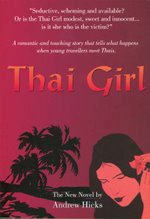
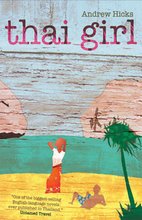
My own solo novel, “Thai Girl”, the story of young British traveler, Ben who gets entangled with a pretty beach masseuse called Fon, has been described by one reviewer as ‘the definitive novel about relations between Thais and foreigners’.

Others say that this accolade should instead go to Jack Reynolds’ story, even though it’s now already half a century old. I’ve seen comparisons made between the two novels in discussions on an internet forum, so I was very curious to see what I’d think of his book.

“A Woman of Bangkok” is the story of Reginald Ernest Joyce, a virginal and mildly irritating twenty five year old Englishman who sells vegetables in a grocers’shop. The guilt ridden son of a rural vicar, he only comes to life, it seems, when he races motorbikes on the speedway track. Could it be coincidental then that Jack Reynolds likewise rode speedway and was the son of a vicar? I’ve read too that Reynolds’ real name was Emrys Reynolds Jones which bears more than a passing resemblance to Reginald Ernest Joyce.

The story starts when lettuce seller Reginald is jilted by his girlfriend, Sheila. She, the hussy, then gets off with his older brother who is clearly more of a man than he. Reggie then takes up a three year contract as a commercial salesman based in Bangkok where he falls defenseless into the clutches of the self-styled ‘White Leopard’, the eponymous ‘woman of Bangkok’. A bar girl of the most mercenary kind who mercilessly parts him from his money, she is soon to be the cause of his disgrace and sudden return to England at the end of the book.

Though much in the book could be autobiographical, Reynolds paints Reggie as a misfit who fails at everything he tries to do, including suicide and seducing Sheila. The critical turning point in his life when he fails to screw his courage to the sticking point is lyrically told by him in the first person as follows.

“Oh, Sheila, Sheila, Sheila. Lying there moaning in the heather. My hand on your heart. My hand under your head. The odour of your hair and skin, as sweet as the heather. Your tense repeated cry: “No Reggie, no. Don’t do anything we’ll regret – please…” I got up and walked stiffly (?!?) twenty feet away. I shouldn’t have been so soft. In fact I was a fool. I let her appeal to the Ivanhoe in me, the medieval Sahib.”

Big brother then apparently seizes both the initiative and Sheila and drags her off to the altar, leaving Reggie twisted and bitter towards women and life in general. Later Sheila tells Reggie that after he’d left her moaning in the heather, “you came back looking all noble like Sir Galahad and no doubt with a new poem in your head”. Reggie replies, “What did you expect me to do – rape you?” “Why not?” says the feisty Sheila.

Reggie rages thus. “Half the human beings in the world are female. The breed is produced by the busload. Billions of the bitches. And every one of them stamped in the same press.”

Thus in the world according to Reggie, when a euro-sheila says no she really means yes, but he soon discovers that certain Thai women in bars know the precise meaning of ‘yes’ if adequately compensated.

Reggie is thus bedeviled by his Christian guilt about sex, torn between perceiving women as bitches in need of a mate and as unsullied beings to be wooed according to the conventions of courtly love. As an outlet for his frustration Reggie has angrily penned a novel called “Perfidy” about how a perfect gentle knight such as he is done over by perfidious women. It expresses ‘the rage of a jilted lover’, says Reggie. It is ‘an outpouring of rage’, full of ‘plummy writing. Over-ripe Victorias. Every semi-colon is like a plum stone in a plum pie’.

The only difference is that while Reggie tore up his fledgling novel in fury, Jack Reynolds got his successfully published.

Thousands of readers have thus since learned that Reggie had a middle-aged landlady in London who took a big shine to him and he, it appears, to her fifties-style legs. In Reynolds words, her calves ‘twinkle fawn-stockinged between this evening’s particular flowery voluminousness and her run-over-at-heels but meticulously-polished shoes.’

The style of the book is sometimes elegant but even for its time is sometimes seriously over-written and slow. My writers’ group back in Exeter would have hammered it for its plummy writing and adjectival retentiveness.

As the story unfolds in Thailand, there’s a premature climax (if I may call it that) when Reggie goes on his first business trip to Korat by jeep with his Thai colleagues and they go to a local pick-up joint. While the Thais freely indulge, Reggie fights shy and goes home, only to slip out and later return to the scene. There at last he loses a few baht and his innocence.

“My pistol-butt is no longer un-notched; my belt is hung with scalps,” he boasts. In this, his first short trip to Isaan Reggie then manages to collect another seventeen ‘scalps’.

Bernard Llewellyn in “With My Back To The East” writes as follows of his own trip to Korat by jeep with Jack.

“We ate that night in one of the restaurants across the water. It was the place – so Jack said, and he should have known – where Ronnie (sic) Joyce, the long-suffering hero of his novel, and his friends had their hilarious meal preparatory to the loss of Ronnie’s virtue in the Korat back streets.”

Once back in Bangkok, Reggie falls into the clutches of Vilai, ‘the White Leopard’ at a dance hall called the Bolero, but sadly for Reggie Vilai is unutterably vile.

Reggie is soon besotted though and meekly reaches for his wallet at her every demand. She bleeds him dry, trying every trick in the book, a money-Dracula of the worst kind, without any redeeming features or even any apparent charm.

Reynolds takes pains to make her as detestable as possible and lacking in any positive human qualities. She spends three to five hours every day putting on her makeup and tarting herself up for the night. Her great pleasure in life is plucking her arm pits with tweezers. She pisses on the shower floor instead of in the squatter. She is despicably unpleasant to her servants and anyone beneath her and, what’s worse, she kicks the little puppy.

Just after a fortune teller has predicted his death, her small son is hit by ‘a long green beautiful car’ which ‘moved with the silent deadly stealth of an arrow’. Reggie then scoops him up, badly injured, and puts him on the back seat of his car. Reluctant to sit in the back with him as he’s dirty from rolling in the road, Vilai strongly resists taking him to a hospital as she wants to get ready for work at the Bolero. It’s Saturday night and there’ll be lots of American there.

When Reggie insists on taking the child to the hospital, she extracts a pile of money to pay the doctors’ fees. She then goes off to the Bolero and when the boy dies she blames Reggie for killing him as he took him to a hospital that would never care for him properly. She then makes him pay all the funeral costs.

Later when Reggie has just driven up to Korat on business, she sends him a telegram to say she’s in serious trouble and needs him to come back urgently. Despite being exhausted after the long drive, he then immediately abandons his colleagues and his work and in torrential rain and in the dark heads back to Bangkok in the firm’s jeep to find her. In consequence he has a bad crash and nearly kills himself.

When he finds Vilai, she slags him off for coming to her house covered in mud and gore, demands a huge sum of money from him to deal with some unspecified crisis and when he says he hasn’t got that much, tells him he’s lying. He’s not good to her like he was before, she says, and she’ll never speak to him again if he doesn’t come up with the money.

Knowing that he’ll now lose his job for going absent and wrecking the jeep and having no money to give to Vilai, he decides to go that night to his boss’s house and to steal his wife’s jewels for her. There’s then a melodramatic scene in the last few pages when he takes a samlor from the Giant Swing to the National Stadium, then a tram (not the Skytrain) past the British Embassy to the house in Bangkapi. There he creeps up to the darkened house and goes inside, contemplating murder if it’s necessary to get the jewels for Vilai. Surprising the poor lady sitting in her bedroom in front of her mirror in a pink nightdress, his boss walks in and the game is then well and truly up for dear Reggie.

By this stage I wasn’t too bothered about what was going to happen to Reynolds’ protagonist anyway as both Reynolds and Reggie had lost the plot as far as I was concerned. I fully accept that bar ladies may sometimes be single minded in their calling and that western men can be extraordinarily naïve, especially when fixated on rescuing a whore with a heart of gold. In my view, however, the extent of Reggie’s fixation for Vilai pushes the bounds of credibility too far, given that she is just so very vain, vile and obnoxious. As described, she gives off no great erotic charge and does nothing to explain the extraordinary hold she has over Reggie in the face of her grotesque treatment of him.

Much of Vilai’s dialogue is cleverly written, authentic and funny, but top scoring bar girls have charisma and charm while Vilai has very little. It’s evident that she’s already over the hill and getting past her screw by date too, so she’s not even very attractive any more. Occasionally she turns on some crocodile tears and plastic affection to manipulate poor Reggie but she is otherwise without any redeeming qualities. Nor, apart from three feckless husbands in her past, does Reynolds explain what has made her such a demon.

There is brief mention of her past as a village girl fondly remembering better times, but that is perhaps universal for those who seek a better life in the city. As a character with a single dimension, she is for me, a cardboard cut out whose exaggerated persona is over the top. ‘Money [is] the most important thing in the world’ for all bar girls but they have to be nicer than this to get it.

Despite its many qualities, the story therefore did not work too well for me. I could not suspend disbelief. While Reggie is a well developed character, even if not a sympathetic one, Vilai is merely a clever caricature. While many of the details about Bangkok and Thailand in the fifties are well observed, again they are hardly affectionate or positive, which is strange as Reynolds must have loved the place.

I’m sure that for a western man who’s been devoured whole, wallet and all, by a bar girl, this book says it all, but frankly it wasn’t for me. It struck me it was not so much about the ‘woman of Bangkok’ as about the post-Christian complexes of poor Reggie, crucified both by Sheila who said no and by Vilai who’d say yes for money but could never return his love.

The book is therefore quite unlike my own novel, “Thai Girl”, which is about Ben’s struggle to understand the Thai girl, Fon. Thus he talks to her at length about her childhood of poverty in Isaan and insists on going to her home in Buriram to meet her Mama. Unlike Vilai, Fon is not a bar girl and persistently says no to Ben, so there are major differences in the two stories. They are comparable perhaps because both explore relationships between foreigners and Thais, but in very different ways.

They end differently too. While Reggie’s DC6 takes off from the airport in Bangkok on the last page of the book, on the last page of “Thai Girl” Ben’s jumbo jet lands in a wet and dismal London.

Nonetheless, “A Woman of Bangkok” is a remarkable period piece that makes me more than curious about its author. Banned, it’s said, in Australia, it must have taken great courage to write and to publish it. In an era when Lady Chatterley and Fanny Hill were being prosecuted for obscenity, a story about prost****ion and men having s*x with the n*tives just really wasn’t the done thing. But is it a great book?

In my own view there are few really fine novels, such as Greene’s, ‘The Quiet American’, but many bad ones like ‘Moby Dick’, ‘The Davinci Code’ and those endless Barry Potter books. Of the rest you may either enjoy them or be disappointed and Reynolds’ book is one of these. I enjoyed it as a period piece and because it was about Thailand but nothing more.

Nonetheless, I’m intrigued to learn more about the life of Jack Reynolds. I know that he was a conscientious objector and during the Second World War was with Bernard Llewellyn in The Friends Ambulance Unit in China. This expertise in transport presumably brought him his job with Unicef in Bangkok.

Little bits of information about him keep surfacing. Enjoying a beer at Kinnaree with Jerry Hopkins in Sukhumvit soi 8 the other evening, Jerry told me that Reynolds had lived in that very soi. He’d written for The World, then the only English language paper and the internet tells me that he had a book of stories about his experiences in China called, “Daughters Of An Ancient Race” published by Heinemann in 1974.

Llewellyn’s book says that Jack was married to a Thai village girl who spoke no English and didn’t enjoy her visit to England. At that time he had two sons called Philip and David, and another on the way. Other accounts credit him with between seven and nine children, though perhaps even he didn’t know the score. The children must be in their fifties today but where are they now? Has the book finally gone out of print because it’s an embarrassment to them? Reynolds is said to have died twenty years ago but again I can find no details as to where or when.

On one of the internet forums, an American called Jim Shaw who’d worked with him on ‘The Investor’ in the period from 1970 to 1975 said recently that after losing touch with him he’d visited soi 8 sometime in the eighties to try to discover what had happened to him but he’d learned nothing. (See www.tfs2m.com). And so the plot thickens.

Though Reynolds pre-dates the internet era, Google searches turn up quite a few results on him but many of these ask the same question as this article. Who was Jack Reynolds and what ever happened to him and his many children?

So can you tell me anything more about Jack Reynolds? If so do please post a Comment on this blog or contact me at arhicks56@hotmail.com.

What was his real name and the surname of his children? How and when did he die? Can you give details of your copy of his book with names, publishers etc? And did the novels Bernard says he was working on when he visited ever see the light of day? It would be good to compile a simple bibliography of his writings.

In the fullness of time I will then try to put together a summary of what I’ve learned and to post it on this blog. If enough is reliably discovered, perhaps it should go on Wikipedia.

It should be perfectly possible to discover what happened to Jack Reynolds but only with your help!

**********************************************************************************

Incidentally, I’ve just learned that a fine early copy of Reynolds’ book in its original dust jacket is available at the Librarie du Siam et des Colonies which is near Pantip Plaza. It isn’t cheap but you could email cgsiam@cgsiam.com to secure it. .

Andrew Hicks The ‘Thai Girl’ Blog November 2009