Sunday, 27 September 2009

Her Papa's A Hunter Gatherer!


In the West there's food aplenty and Pooh Bear and Tigger can get fat on sweet cup cakes. Here in Isaan, the poor North East of Thailand, they have plastic plates but little to put on them. Tiny crabs, shrimps and shell fish are gathered from the flooded rice fields and add flavour to the rice. There's a long tradition of hunting and gathering though it's not possible now to make a living from the forests.


Fish caught in the outfall from our pond.

A bucket of bamboo shoots cut from around the pond.

Cat spent hours chopping and boiling to make them edible.

This crab just walked into our garage...

... so did this frog and ended up getting eaten.

A vicious spear for fish and frogs and whatever gets in the way.

... and this is the bucket of protein Cat brought back one night.

But it's not enough. The young have to work in Bangkok and grandmama gets left holding the baby.


I’ve written before about how the forest in the Surin countryside where my wife, Cat and I now live used to be bountiful and how it abundantly yielded birds and animals to eat, roots, leaves, nuts and fruits. Her childhood was spent gathering food in the countryside and her memories of that time seem to be happy ones.

The trouble is now that every available scrap of land has been made productive and almost all the forest has gone. With increasing population, farming cannot support the population and this unlimited resource of free food for the landless is no longer there. Thus the young and fit have to move away to the cities to find low paid work, often leaving their small children with Mama Papa in the village.

I’d never before thought of Thais as hunter gatherers but rather as prosperous growers of rice, so this is a new insight for me. Farmers and pastoralists wandering the world with their cows are the wealthy ones and the hunter gatherers are all but gone. One thinks only of the pygmies in the Congo, of the Punan in Borneo and the Orang Asli or Sakai in the mountainous jungles down the spine of Malaysia.

I’ve seen people in West Africa who wore nothing but leaves but even they grew crops. I’ve stayed with Dyaks several days up the Skrang river in Sarawak, sleeping under the huge bundles of human skulls tied up with rattan. They lived off the jungle and just before we went out hunting orang utan, they showed me the paws of a bear they’d killed a few days before. They also grew a few vegetables and kept pigs that ran wild in the forest around the long houses. This was fine by me but in the absence of a WC, when I headed off into the jungle to hide behind a bush, the pigs would come running. They were so keen to get up close and personal as I squatted down that they almost knocked me flying.

The only pure hunter gatherers I’ve ever met though were the Sakai in the Taman Negara national park in Malaysia. In the vastness of the jungle we were lucky to come across them sitting in low temporary shelters of palm and leaves. They were very hospitable as they showed us how they whittled the darts for the blow pipes with which they killed monkeys and showed us the roots and the honey they’d recently collected from the jungle. They were delightful people to meet, their most precious possession being the fire that they kept glowing in one of their shelters.

I now realize to my surprise that my Thai wife too is a hunter gatherer. There’s nothing she loves doing more in the village than collecting food and despite the loss of the forests, it’s still out there if you know how to find it.

And it also comes into the house too without being asked! The garage is a cool, quiet place where we’ve caught intruding crabs and frogs, rats and even a scorpion, and all of them have gone into the pot.

Then when it rains heavily at night, the frogs cry out noisily and Cat gets up and goes out in the dark and the wet hunting them. She takes a powerful head torch and a vicious looking spear and returns with several kilos of frogs and fish in a bucket.

We’ve had heavy rain recently and the fish pond overflowed and she made a fish trap of fine netting where the water runs out. This produced quantities of beautiful small fish of the kind that are used to make plaa raa, the foul smelling fermented fish that Isaan people so love.

Then Cat takes the bamboo shoots from around the fish pond and spends ages cutting it into tiny slices and boiling it up to soften it. One dish she made recently was to mix it with rice, chopped pork, various spices and a liberal quantity of plaa raa and fiery chilli to render it totally uneatable by any farang. Then it was wrapped in parcels of banana leaf to make a local delicacy that was truly a labour of love.

She also collects pak ah chet, a leaf that grows on the surface of the pond. And she gathers kee lek from behind the house which is pounded to make a bitter green paste or soup, and at a certain time of the year we go out to the rice fields and climb the sadao trees to collect the young shoots that again are cooked up to make a decent curry as bitter as bile.

Then there was the trap with a blue light that accumulates a huge quantity of insects overnight that are fried up and eaten as a snack. The rice fields are full of fish and crabs, shell fish and prawns, all there for the taking, just like at the seaside, so in some ways the countryside is still nothing less than bountiful.

Nonetheless, you have to have land as there is no longer enough to sustain the whole population of rural Isaan. And that’s why the middle generation has gone off to the towns to find menial and badly paid work.

A few days ago one of Cat’s aunties came in to show off a new grandchild that had just been left with her by her daughter who works in Bangkok. This woman had eight children of her own but with only one of them now still with her in the village, all the others having gone away to the south. She already has two small grandsons living with her, their unmarried mothers gone far away so a third is a real burden, not to mention the cost of milk formula. From time to time her family send back small sums of money her and Papa and the children but for them it’s a poor life, living in what an only be described as a shack. They have absolutely no other income.

The new child is of course a joy, but the burden for an old woman of raising yet another baby is hard. But that’s just the way it is in rural Thailand.

The comfortable middle classes in Bangkok benefit from a vast pool of cheap labour while Isaan is a totally different world.

The village is a real community, though under threat, but it’s sad if more of the benefits of the modern economy cannot be brought to the countryside. That tension is of course what the current political turmoil in Thailand has been all about.

Meanwhile Cat has her farang and a comfortable life, but I respect her passion for living off the land and for not running a mile from the toughness of her upbringing. That’s what makes living in the village more rewarding for me as Cat’s enthusiasm for country life brings me a little closer to what remains of ‘the real Thailand’.

Andrew Hicks The “Thai Girl” Blog September 2009

Saturday, 19 September 2009

Remembering The Ancestors


At the village wat we remember family who have passed on.

Making offerings of food and alcohol to propitiate their spirits.


The animist shrine in the temple grounds.

Tribute is paid to a small laterite rock.


“Tomorrow we go Ban Lamong… take food to grandpapa,” says Cat breezily.

“But he died years ago,” I reply, puzzled for a moment before I realize she’s talking about the annual ceremony at the temple remembering her mother’s dead relatives.

Towards the end of pansaa, the Buddhist ‘lent’, it is the custom of the Suay people to gather at the temple where their family members have been cremated and to hold a ceremony with the monks in their remembrance.

Curiously this coincides exactly with the Chinese ceremony of Ching Ming when families gather at the ancestral graves with food offerings and joss sticks and sweep the graves. I used to watch this at crowded ceremonies in Hong Kong and it looked a happy occasion when all the family made the effort to gather together and honour the departed. It was more like a party than mourning, which was thoroughly healthy and appropriate.

To me it seems a major omission that in the West we have no such custom. We cremate our dead in a clinical crematorium and quickly move on with little ritual or formal grieving. There is no grave to return to and we have no tradition of coming together to remember them at a particular time. Our elders seem to be readily forgotten.

Not so in Suay culture, of whom Cat’s mother is one. Here the spirits of the deceased are all around and need to be attended to and kept sweet. Thus it was that we all climbed into the pickup that morning and headed off to the next village where Cat’s mother had been born and raised.

It was a grey day, heavy with rainy season cloud as we arrived in the temple precincts and parked by the cremation ground. The first small ceremony was to make offerings of food and alcohol to the spirits of the dead. These were placed at the foot of a tree and the old aunties and uncles sat round, pouring alcohol into bowls and presenting the sticky rice to grandpapa.

Then mats were laid on the ground and four elderly monks in saffron robes arrived and sat in a row under the trees. There then began a long formal ceremony in which they chanted the names of those to be remembered and went through the usual formal chants in Sanskrit.

“Bhut thang saranang katchami.”

Then everyone went off to the temple hall while I waited outside. As always there were long announcements on the battered PA system, including lists of small donations given by various locals, often of ten or twenty baht.

Waiting by the pickup I'd noticed a curiosity, a small animist temple right here in the grounds of the Buddhist temple. As I watched, three ladies walked across to it and started making food offerings to its very pagan altar. On this was a large chunk of laterite rock with a ribbon around it, various small figures and the remains of old food offerings. They of course were very amused about the farang with his camera and chattered happily away to me. The one thing I heard was that one of them said they were giving food to Buddha.

I am constantly fascinated by this commingling of Buddhist and animist ritual and the complete failure to distinguish between the two. First of all, propitiating the spirits of the ancestors by the Suay was a wholly animistic ceremony, as appeared from the making of offerings at the foot of the tree. Buddhism and the temple then claim a part as the monks perform their rituals, while on the sidelines further offerings are made to a rock with a ribbon around it.

Just as Christianity, the religion of a jealous god, nevertheless accommodated many pre-christian beliefs and festivals such as that on 25th December, so every organized religion has to absorb existing poly-theistic beliefs and practices. Buddhism is especially tolerant and so happily co-exists with the animism that surrounds it. Monks participating in animistic rituals is thus to be expected but I do sometimes wonder how much of Buddhism actually remains in Thailand once animism has stripped away.

The ladies in the animist shrine said they were giving food to Buddha but what really defines a religion is not the labels but their actual beliefs. Ask a British Christian or a Thai Buddhist what they actually believe in and you’d hardly get a cogent answer. What I suspect though is that the minds of the people around here are filled with a strong belief in the spirits of their ancestors and of the forces of nature that surrounds them. What room that allows for true Buddhist philosophy or observance I have very little idea.

The ceremony in Ban Lamong though was one of the nicer ones and every society should likewise mark an annual occasion when everyone comes together as a family to remember the past and those who are no longer with them.

It strikes me that in this respect our western society is decidedly lacking.

Should we not do this too?

Andrew Hicks The “Thai Girl” Blog September 2009

Friday, 11 September 2009

"Thai Girl" Goes to Hollywood


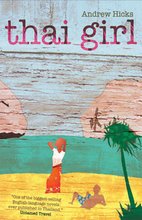
It’s perhaps every novelist’s dream to see their story on the silver screen, so I’m more than pleased to tell you that my novel, “Thai Girl” has been optioned as a Hollywood movie.

It’s a small studio in Los Angeles called ‘Filmed Imagination’ run by two interesting characters called Daniel Dreifuss and Marius Haugan and that suits me just fine. The big studios often option novels in large numbers and, like a developer’s land bank, keep them indefinitely gathering dust on the shelf in case the story comes into fashion.

For this studio though, “Thai Girl” is a key project and they’re strongly committed to getting it filmed. Marius, a long time visitor to Thailand developed a passion for the book and its story and had little difficulty persuading Dan that it was just up their street. They see the book as having many key qualities that would make it a fabulous movie.

The “Thai Girl” story is set on the beautiful holiday islands of Koh Samet and Koh Chang, in Bangkok and the rice fields of Buriram province. It thus offers exotic locations of sea and islands and Bangkok city nightscapes, together with the softer contrasts of the real rural Thailand. Visually it should be stunning.

As a bitter sweet romance between Ben, a good looking English lad off travelling after university and Fon, a pretty beach masseuse, “Thai Girl” explores broad popular themes of universal appeal. When their two very different worlds collide, Ben and Fon are swept along together, grappling with the eternal confusions of a cross-cultural relationship. As Ben vigorously pursues his passion for Fon, the sparkling Thai girl of his dreams, she resists his advances, refusing to be distracted by a passing foreigner. Will Ben get his girl? Will Fon overcome her natural suspicion of this attractive young guy and fall for Ben?

The key characters are few and the story’s structure is not unduly complex, so it should adapt well as a feature film that’s every bit as compelling as readers often find the book.

A review of “Thai Girl” has described it as ‘one of the top selling English language novels ever published in Thailand’ so the story certainly seems to have a wide appeal. It also has many thought provoking themes that a movie maker could interpret and develop. Another reviewer has called it ‘the definitive novel about relations between Thais and foreigners’, so the movie should be more than just another sentimental love story.

One of the first things that impressed me about Dan and Marius before I signed up with them was that they are very committed to “Thai Girl” and its themes and so, I hope, will make a movie that’s true to the book. I put it to them that the ending isn’t very Hollywood but, they said, two star-crossed lovers called Romeo and Juliet likewise failed to overcome the forces that kept them apart and their story has made some great movies. The happy couple do not have to sail off into the sunset together for it to make it a successful movie.

I’m thus hopeful that an engaging film will emerge that is positive about Thailand, that showcases some of the finest visitor attractions here and is respectful of the Thai people generally. There’s a tendency for movies set in Thailand to focus on a seedy fantasy land of sex and drugs and crime. In strong contrast the “Thai Girl” characters are down to earth, ordinary and real. Ben is fresh and clean living and Fon is not a bar girl but is a serious Buddhist who works hard for her family.

While Ben is intrigued by the Bangkok bar scene, he thus does not waver in his passion for Fon but struggles to understand why young Thai women are so readily treated as a saleable commodity to attract single male tourists to Thailand. When he visits her village in Buriram with Fon, he begins to understand how farming is no longer a viable way of life and that young people, Fon included, have to find a new life for themselves far from home in a perilous world. His experiences with Fon illustrate for him all the stark issues that confront the more thoughtful western visitor to Thailand, an aspect to the story that can give the movie depth as well as just being entertaining.

Finally, what existing movies are there already about young travelers exploring the cultural mysteries of Thailand? Apart from “The Beach”, (which was about an anonymous ‘desert island’ community and made very little specific reference to Thailand), there really aren’t any at all. Given the enduring popularity of Thailand with young visitors, this is thus an extraordinary omission and a huge opportunity for a movie maker.

Current economic conditions aren’t that good for financing a movie but nonetheless the industry grinds slowly on. “Thai Girl” won’t be an expensive movie to make and, in difficult times it’s a great moment to produce a love story that’s poignant and beautiful and plucks at the world’s heart strings.

Writing “Thai Girl” has been a very rewarding experience for me… “Thai Girl”, the movie would be the icing on the cake.

I can’t wait to see it on the big screen!

Andrew Hicks The “Thai Girl” blog. September 2009

Friday, 4 September 2009

Thai Education - A Small Gleam of Light


Any headmaster would glow with pride at the achievement of his school in running so joyful and exuberant a sports festival as the one Cat and I have just attended at the small primary school here in our remote Surin village.

I sometimes read dire things about Thai education in the media… that levels of achievement in Thai schools are depressingly poor compared to those in similar countries and that Thai children don’t read books. Universities are said to be dismal temples to rote learning and conformity where smart student uniforms and glossy degree ceremonies are more important than academic rigour or creative thinking.

On these things I can hardly comment… all I know is that our village school is a delightful and happy place which is just how a primary school should be!

It’s a small school with about a hundred children aged from four to twelve. Funding is short, the wooden upper storey of the building is literally collapsing and the children are all from poor rice farming families. But it’s full of energy and fun, the classrooms are bright with childrens’ work covering the walls and the teachers are gentle and dedicated. I’m sure that the kids will later look back on their years here as a golden time before they faced the uncertainties of finding a life as adults in a place where farming is viable only if you have enough land.

The annual two day sports festival that’s just been held was a big event involving the whole community and it was fun all the way.

It started early with raising and saluting the Flag, followed by a tribute to the King and then a parade.


The first event was a display of dancing by some ladies of the village. I’m so glad this was traditional and dignified and not a silly imitation of the modern pop dancing that’s inescapable on Thai television.


Then came a display of dancing by some of the oldest girls. It’s hard to believe that they’re eleven and twelve, something that perhaps reflects on poor nutrition.


They were then followed by another troupe of girls all dressed in pink.


The performers then all assembled in front of the teachers and VIPs for congratulations on the work they’d done, before the running races got under way.


The children all seem to be tiny but they ran incredibly fast. An over-sixties race was devised to drag me into the limelight, my only problem being that half the field were in their forties. I managed to hit the tape first with my hand but this didn’t count so the little girl in the pretty dress brought a silver medal for me and not the gold!


The second day saw a series of novelty events and races in the morning followed by football on the afternoon. I missed Cat playing for one of the womens’ sides but I watched the mens’ match later. And was it fast and furious… far more entertaining than a dull World Cup match moving glacially towards a penalty shoot-out.


That evening there was a big party in the school hall with food for everyone, a live band and presentation of all the trophies for the two days of events. It was a riotous ending to a memorable event and it went on quite late.

The whole thing reminded me that one thing the Thais are particularly good at is throwing a party and making it riotous all the way. Fun it was but the sports festival was also important as institution building for the school and for developing community spirit within the village.

I have no way of knowing how good the school is in academic terms but that probably is not its only or principal focus. I’m sure the children generally leave the school with basic literacy and numeracy, also knowing their ‘abc’ and able to say ‘siddow pree’ and ‘stannup pree’ and all that is a substantial achievement. In any even, too academic approach is probably irrelevant for the village children.

It seems that Thai education is not over-academic but looks to wider aims of community and nation building, of developing collective responsibility in its pupils, protecting them from the dangers of drug taking and promotes team spirit and good health through sporting activities. And these things our school seems to do very well indeed.

I like and admire the dedication of the teachers to the children and that’s why Cat and I have worked hard, initially with a generous Japanese friend, to provide school lunches for the children. While not exactly malnourished, these little Thai school girls and boys are evidently very tiny and a large proportion of them are in fact under the correct body weight for their ages.

As official funding does not run to providing lunches throughout the year, the children just bringing a small quantity of rice with them to school, Cat and I have been collecting donations from friends and readers of this blog to make sure they have a proper cooked meal with meat and vegetables every day. (See my blog articles, ‘Do They Know It’s Christmas?’, 12 Dec 2008, and ‘Thai School Girls Are So Appealing’, 19 Jan 2009.)

A second project has been to build a large chicken shed for egg production. The chickens are now laying about a hundred eggs a day but the money to pay for the chickens and for feed has been borrowed and needs to be repaid. Thanks to readers of this blog, some donations have come in but we still have a little way to go. (See my blog article ‘A Quick Trick Chick Factory’, 13 August 2009.)

Living as I do in this village community, I feel it’s important to make a contribution of some sort and how better a way than this. The school is a real credit to the teachers and to everyone else and is worthy of whatever help we can give.

It’s a bright spark of light that counters the doom-laden criticisms one too often hears about education in Thailand and I love it because it's such a happy place.


Andrew Hicks The “Thai Girl” Blog August 2009

Thursday, 27 August 2009

'Thai Girls' v. Western Ones? - To Be a Bitter Man! Revisited


Bangkok Dangerous! A retired farang art teacher with two professional women (a primary teacher and an insurance salesperson). Is he at risk of getting gobbled up?


My last two blog articles have been long and serious and so perhaps it's time to lighten things a bit.

The topic of sleazy old western men proposing marriage to Bangkok bar girls and what each expects from the relationship is an endless subject for debate. Of course really the men are honest and decent and the girl has a heart of gold and only wants to take care of her mother. And they'll live happily ever after with never a tension about money or the fact he snores and won't eat insects.

In February I posted a blog under the above title and it had a huge flow of readers, mainly males of the long nosed variety.

Having today received an interesting new Comment from 'Bluebird',a Thai woman on the topic, I now want to draw your attention to it.

Ugly western men have regularly made offensive advances to Bluebird, she says, on the assumption that 'all Thai girls are for sale'. How can these men expect happiness if they take on a Thai wife years their junior, expecting her to be 'a docile mouse who'll be their whore, nursemaid and housekeeper'.

In my Comment that follows hers, I then regret the fact and ask why Thai womanhood has got this terrible reputation of being open to all offers. Is it their fault, the fault of Thai men who accord them too lowly a status or governments that have connived at rampant sex tourism?

So let's revisit that blog article, please read Bluebird's new Comment and let battle recommence. The truth is out there somewhere!

TO FIND the February blog article, "'Thai Girls' v. Western Ones"...

....scan down the right hand margin to 'Blog Archive', click on February, scan down to 'Blog Archive' again and click on the article's title that should appear.

Saturday, 22 August 2009

Can Oxfam Really Help Thailand's Rural Poor?


Home to a large family, this house in our Surin village is quite typical around here.

Once their modest rice harvest is threshed, many of them will leave to find work in the cities as there's no livelihood for them here during the long dry season.

An old hunter gatherer enjoys the luxury of his new kitchen.


The wealthier old men spend every day out in the fields looking for grass for their two or three buffaloes. By feeding up and selling one calf a year, their notional annual income is thus about 10,000 baht or 200 Pounds Sterling.


[This blog is long but please scan down it and you’ll find my appeal for your Comments and thoughts on the wider issues below.]


Tackling rural poverty...

Lifting Thailand’s rural poor out of poverty is the key to the country’s future, but how to do it? I for one don’t have any real answers.

My efforts to promote egg production at our local village school (that I wrote about in the previous blog article) reminds me though of my long-standing interest in the small scale development work of Oxfam, the well-known NGO based in Oxford in the British midlands.

Their philosophy always seemed so very right and principles of sustainability chime so well with the more recent ideas of integrated farming and sufficiency. But how effective can this really be for solving the problems of rural Thailand?

Oxfam still has the right approach but the huge limitation that I see from living in a rice growing village in Thailand’s North East is that with a large population in the countryside there just isn’t enough land to go round. Agriculture is thus only a part of any possible answer to rural poverty.

My wife, Cat, has vividly described for me her childhood in a poor landless family here in the North East of Thailand where they lived essentially as hunter gatherers. Papa rarely if ever had any paid work and so they lived by foraging in the forests and hunting for insects, frogs, fish and rats and whatever else flew or crawled on the face of the earth. Her experience is quite typical of how life has been but now in some respects it’s even more difficult today.

In this way they raised a family of seven children and all the aunties and uncles had similar large broods. All of them eventually inherited parcels of rice land but these are small. When Papa gets old and the land is again divided among the seven children, the tiny plots hardly provide enough rice for their own consumption let alone a surplus to sell for cash. Most families do not have enough land to provide even a marginal living. To add to the problem, the forests that Cat describes as their main source of food are now all gone. The harsh truth is that the countryside can therefore no longer support its growing population.

Agriculture is of course still hugely important and governments and NGOs such as Oxfam can work to make it more efficient but any suggestion that the land is the sole or principle answer to rural poverty would be highly misleading.

I was therefore interested recently to learn something more of Oxfam’s approach to this conundrum as Oxfam and I go back a very long way and I have a lot of respect for its development work. If in my life I’ve done anything of permanent value it was being instrumental in establishing Oxfam Hong Kong, now a major independent Oxfam.

In the mid-seventies when lecturing at the University of Hong Kong I joined the local Oxfam group which ran the usual small shop selling second hand clothes. I then persuaded the committee to allow me to start general fund raising based on articles I wrote for the South China Morning Post on development issues and Oxfam’s work in the developing world.

When Pearl and Dean, the advertising agents for the new mass rapid transit railway were failing to fill their huge advertising hoardings, I persuaded them to let us have some space for free. We splurged on quality posters depicting classic images of starving Africans and the money came pouring in. This way we raised hundreds of thousands of pounds to send back to Oxfam’s head office in Oxford and when the Somali famine hit, we employed a full time fund raiser. Millions came in through the generosity of Hong Kong people, many of whom could remember poverty, and the rest is history. Now Oxfam Hong Kong is a huge independent organisation with its own extensive development programs throughout the region.

For me it was an exciting time. Every year I visited Oxford and had meetings with the Oxfam big wigs, including Frank Judd, then the director. And they in turn visited us in Hong Kong, always staying in my large university flat. At the time China was opening up and there was a steady flow of Oxfam staff planning new projects there. They were interesting men of the generation who’d gone through World War Two and had later found new and exciting work with Oxfam. I best remember Bernard Llewellyn and Guy Stringer, the deputy director, both larger than life characters sprung from a very turbulent era.

Bernard’s wartime experiences with The Friends Ambulance Service in China became the subject of a book he wrote and I’ll never forget Guy telling how he took the first shipment of emergency aid into Phnom Penh after the overthrow of Pol Pot. The stories of a barge being loaded in Hong Kong and towed up the Mekong (where they were charged customs duty on the shipment!) and how their engineers worked on getting water supplies going and restarting the cotton mill are worthy of books in themselves.

Guy and his wife Mary later stayed with me in Singapore when we tried to perform the same miracle again, to launch another new Oxfam, but sadly we hit a brick wall. The Singapore government refused registration of ‘Oxfam Singapore’ with no reasons given and despite the strong support of many individuals that was the end of a great idea.

Only this summer I was saddened to see an obituary notice for Guy Stringer in The Times, Mary having died a few years ago. Characters like these pass one’s way but rarely and I’m grateful for my involvement with them and with Oxfam.

In April I was thus very pleased to see on the agenda of the FCCT (Foreign Correspondents’ Club of Thailand) that staff from the Bangkok office of Oxfam were to make a presentation of a new Oxfam report entitled “The Right to Survive: The Humanitarian Challenge for the Twenty-First Century.” The key point of this paper is that because of climate and environmental change the number of people affected by natural disasters will double and plans must be made to mitigate the impact and to provide additional emergency relief.

I of course went along to the meeting at the FCCT in Bangkok where one of the three Oxfam staff also presented information about work they are supporting in Yasothon promoting the growing of organic rice. According to the hand-out, one farm had actually doubled its yield of rice as well as presumably getting a better price for the organic rice produced. How this was achieved was not explained and while I stood up and asked some questions of the Oxfam panel, I am still intrigued and perplexed as I thought that organic yields would be lower.

It also came as a surprise to me that Oxfam was doing development work here but their website tells me (www.oxfam.org.uk/oxfam-in-action/regions/eastasia.html) that though Thailand is a middle-income country, pockets of poverty exist. Their work here focuses on achieving sustainable livelihoods through crop diversification and developing organic standards and practices. They also promote training of farmers on soil improvement and ecologically friendly pest-control as well as rice breeding and seed selection. Finally, it says, they aim to achieve community marketing so that farmers can get a better price for their crops.

After the FCCT meeting I chatted to a couple of the Oxfam staff and expressed my dismay at the struggle the people in my Surin village have trying to make a living from the land. One of them was distinctly upbeat though and, he said, with a few relevant tweaks from Oxfam they could soon change their lives for the better.

I am still unsure what these ideas might be though and felt frustrated that my questions could not clarify what exactly Oxfam had in mind. I therefore wrote a long ‘stream-of-consciousness’ memo and emailed it to the three Oxfam staff who had made the presentation at the FCCT.

Understandably, all I got was an ‘out of office’ reply from one of them (on 21 April 2009), but I received nothing more. Though I realize public relations is not the focus of their work and that they’d have no time to read a long memo from a nutty enthusiast, I admit I was a bit disappointed at their silence.

I have therefore added the text of my Memo to the end of this blog in the hope somebody reads it and, needless to say, I long for your Comments on the issues raised here, whether you be a Thai or a farang who loves rural Thailand and are concerned for its people.

Middle class urban Thais (who of course run this country) may often know little of the lives of the rural poor on whose cheap labour they rely for their comfortable life-styles. At least Thaksin Shinawatra when prime minister, made an effort to get into the villages and to inform himself, even if this was political grandstanding. Even so, he had no real answers other than pouring in money and, for example, his million ‘rent-a cow’ project lifted nobody out of poverty, except perhaps the overpaid administrators who spent huge sums for each cow put into the scheme.

In strange contrast there are many farang who live, as I do, deep in the Thai countryside who become knowledgeable about country life and farming. I would especially love to receive some thoughts and comments from you. So do please post a Comment and tell me your thoughts on the future of the Thai countryside.

The memo that I sent to Oxfam in April now follows on…


Some Reflections on the OXFAM Global Warming Report

From: Andrew Hicks
Surin
arhicks56@hotmail.com


1. Your report is impressive and covers a vast canvas. As I have lived for some time in a small rice village in Surin, the case study on organic rice in Yasothon was an interesting focus. I am still perplexed though how it is possible to produce as good a yield as rice chemically fertilized. The number of buffaloes has fallen substantially in recent years and as they are already grazed in the fields over the dry season and the manure from their stalls is used on the fields annually, I do not see where any additional natural fertilization comes from. Mangorn, my brother in law also ploughs in the stubble soon after the crop partly to avoid the scourge of neighbours burning theirs off and the fires spreading so I am not sure what else he can do to improve fertility. I also wonder how pests are controlled.

2. The land in our village is very flat and water seems well managed with the water courses canalized by weirs, so there seems to be little further run-off and water loss that could be reduced. Being flat there is also little opportunity for reservoirs. Small ponds cannot contribute to rice cultivation so I’m not sure how water management can be better achieved. How about seed types that need less water?

3. Mangorn produces good quality khao hawm mali rice and I’ve always thought that the way to improve his income would be to cut out the middle men. If only he could be part of a co-operative or fair trade association that would allow the rice to be bagged and retailed or even exported (value being added locally) without the intervention of so many middle men. How can he do this without getting murdered by the millers?

4. Things are changing fast even in the six years I have been in the village. There is now a labour shortage so that some small farmers cast the seed rather than pricking out each seedling which leads to lower yields. For the first time this year Mangorn used a combine harvester as he despaired of finding labour. The full story and pictures are on my blog at www.thaigirl2004.blogspot.com. The Tyranny of Rice, 23/11/1008. (See also There’s Fish in Them Rice Fields, 19/1/2008, Harvest Home, 15/12/2007 and Whither the Rice Harvest? 12/7/2007, and many other blog articles on the local economy in the village.)

5. I’m not sure that talking about food security in the context of Isaan is relevant any more. This is now as much a remittance economy as an agricultural one. Families of my wife’s generation typically had seven children and as Papa divides the farm between them, land holdings become pathetically small. The fit thus have to leave the village to find work leaving behind children and grandparents and creating a massive social problem of which you are well aware.

6. How can economic activity be created to keep people in the village? It is hard to see how to improve the efficiency of such tiny land holdings. The ‘modern’ way that tends to occur is that the successful buy up the farms of the failing farmers and larger and more efficient holdings result. This also means more landless families, bringing the problems of poverty and an increasing wealth gap, as for example is so stark in the Philippines. It’s what may gradually happen in Isaan too, unless there is strong official intervention to keep the local economy intact. However, when officials talk about Isaan they tend to focus only on agriculture which is a big mistake.

7. The problem is beyond the scope of small scale development assistance which nonetheless still has a role to play. What is fundamentally needed is an official policy of regional development, devolving official agencies out of Bangkok and more importantly providing infrastructure and incentives for small industry in the regional centres. This would bring jobs and the modern wage economy to the people rather than uprooting them and cramming them into an overcrowded capital and Eastern seaboard. As a stimulus package and a populist policy, regional development going beyond agriculture is an opportunity that is sadly being missed.

8. In our local market town, Sangkha, there is one small garment factory employing a few hundred people that has been set up recently. With lower land and labour costs I hope it is a success as it could be a model for this sort of development. Could Oxfam study it and present it as a model for policy makers? (In passing, Khun Mechai of Cabbages and Condoms fame has promoted a small industrial estate, called T Bird as I remember, in Nang Rong, Buriram and this is a great experiment, but how to build on its success?)

9. Small isolated development projects are of course a drop in the ocean unless they inspire replication and a pyramid effect. This needs the participation of strong local agencies. I often wonder how effective official agricultural extension work is for example. I’ve never heard of it being used in Surin and I wonder if our local farmers’ instead just work traditionally on a hit and miss basis. Language excludes me from a full understanding of what goes on but I do not get the feeling that rice farmers are very professional in their approach. I cannot for example imagine anyone reading a conventional manual on converting their farms to organic rice. How about therefore developing handbooks on integrated or organic farming or whatever in the cartoon style of story book found on every news stand in Thailand? (In the eighties Singapore was having an economic downturn and presented its pay cuts and stringency measures to its populace by means of cartoon books… and why not.)

10. Local schools are another opportunity to promote development aims if you could get local education ministries on side. In our village school, my wife and I are working on a very small scale assistance scheme with the generous help of a friend in Japan, starting first with a free lunch programme… 45% of the children are under their correct body eight and otherwise eat only rice during the school day. (See www.adoptavillageschool.org and www.thaigirl2004.blogspot.com, Do They Know It’s Christmas, 12/12/2008.) My daughter in UK has just given us 50,000 baht (sadly not tax deductible) for a project in the school. The teachers who are most impressive, immediately proposed a chicken/egg house which is now newly built and when I get back to the village I will photograph it and post a blog of the story. It is a dream project if done well. The children will do all the work of running the project and I think the teachers see the potential for integrating the project into the curriculum with teaching of mathematics etc.

11. Formal employment is limited in the rural areas so most people start small businesses. Sadly they have limited expertise in managing the money so most businesses should never be started or unnecessarily fail. Nobody does a business plan even on the back of a cigarette packet and they seem to have a limited concept of profitability. If their business generates a flow of cash they just spend the money and have a good time, keeping no accounts. Teaching basic business skills as part of the early curriculum in schools could thus make a huge contribution to poor areas, helping to avoid the many hopeless projects that people throw themselves into, miring them in debt. Within a few hundred yards of our home three of the poorest families bought brand new Nissan pickups (top of the range of course) as these were on offer for a deposit of 9,000 baht. Within a year all had failed to use them to generate sufficient income to pay the finance and all the pickups were repossessed, leaving the families with massive unpaid debt. One of the families has fled the scene and disappeared, probably beholden to loan sharks, leaving their house derelict.

12. I do not yet know if the chicken/egg project would actually be viable as an independent business. Eggs may be so cheap that the capital cost and inputs such as feed will make it unprofitable. At present local chickens are free range scrawny things, but at least they cost nothing to feed. If hopefully raising chickens under cover is viable, a generation of children should leave the school with a grasp of how to do this and most essentially how to manage the money and of the concept of profitablity.

13. A development agency could work on a project such as this and create a blueprint on how to do it, with costings and designs for the building and equipment, feed and finance and with classroom materials such as maths and accounting and cartoon style manuals on how to run the business. Then it would be essential to promote the idea to school authorities and to assist them to launch multiple projects in rural schools. Our school runs from age five to twelve and this is a good age when the children are receptive to ideas such as this. A new generation could be given essential small business skill that at present are lacking.

14. Our school has a large fish pond but at present there is no money for fish food. They want to develop this as the next project, perhaps using organic methods of creating a sustainable eco-system in the pond. They are already trying, but no big fish I think result.

15. Returning to agriculture, in the last six years in Surin I have seen a big diversification into rubber, cassava and sugar cane. Rubber is a long term risk but the story about cassava and sugar that I usually hear is that prices fall during the growing period and money is lost. Farmers generally have no money to put into diversification and when the hoped for profits fail to materialize, they fall further into debt. Rather than focusing on farming, the only answer is for the men to go and work in the factories and building sites and the prettier girls go off to Pattaya, Patong and Patpong. All very sad.

16. Are there no new magic crops that can be pulled out of the hat? Is there anything the Israelis do that does not need heavy irrigation or capital inputs? How about ground nuts, cotton, sorghum and cassava that are key cash crops in the savannah of Northern Nigeria which has a similar climate of rainy season followed by a six month drought. Indonesia grows black pepper and vanilla which are called ‘green gold’ and I wish there was something new for us here in Surin. One can talk glibly about integrated agriculture and growing vegetables to lift people suffering drought out of poverty but in reality it is desperately difficult. Plants shrivel in the heat and even if successful they sell in the market for very little.

17. Raising pigs, frogs, insects, mushrooms and cat fish are all possible projects but it isn’t easy to be successful. Inputs such as feed usually deny a profit.

18. On my blog at www.thaigirl2004.blogspot.com there are numerous articles and photos about Mangorn and his struggle to support his family through farming. Also about our efforts at the school and about social problems in the village generally. If OXFAM can use any of the text or photos in any way, I’d be delighted.

19. I have also written on these subjects in a book now widely available at all bookshops in Thailand, called MY THAI GIRL AND I. This is my story of meeting my wife, Cat, and coming to live in our Surin village. (See www.thaigirl2004.com) It is also a vehicle for me to describe in a popular style the crisis in agriculture and for example the struggle of Cat’s brother, Mangorn to feed his family. There is one mention of OXFAM in it. During the late seventies and early eighties I lived in Hong Kong and with my then wife, we joined the local Oxfam group which ran the usual shop and persuaded them to let us begin general fund raising. When we managed to raise many hundreds of thousands of pounds a year Oxford showed great interest and support, we employed a part time fund raiser and the rest is history. Hong Kong was a ‘virgin’ community for such fund raising and I’m sure you know much more about the success of Oxfam Hong Kong than I do. I’m proud though to have been instrumental in getting it started and for several years Oxfam was a big part of our lives.

It is good to have made contact and I shall in future follow your work here more closely.


Andrew Hicks
April 2009

Thursday, 13 August 2009

A Quick Trick Thai Chick Factory!


Children enjoy Guides and Scouting at our village school

Cleaning teeth after the lunch we've been providing for them.
alt=""id="BLOGGER_PHOTO_ID_5369275806732069778" />
With a big donation we've just built the school a new chicken house

Headmaster and staff inspect the eighty new chickens.

The headmaster signs for the first 20,000 baht towards the costs.

A record is kept of money paid for lunches and capital items.

Children look after the chickens and record the eggs laid each day.

Three months' feed has cost 21,420 baht, eighty chickens 16,000 and cages 7,500. We now need to raise donations to pay off the 45,000 baht borrowed to pay for them. (Approx US$/Baht 34, Euro/Baht 48, Pound Sterling/Baht 55.)


Helping Out At Our Village School

Times are particularly hard at present for the people in my rice growing village in Surin province in Thailand and as a wanderer from a wealthier world I’d really like to do something to help.

It’s Thai children who have the simplest needs and so the village school in Ban Mahachai is the obvious place to try.

In my blog called, “Do They Know It’s Christmas”, 12 December 2008 I told you about the plan set up through the generosity of a Japanese friend to benefit the school. You can find the details on www.adoptavillageschool.com in which our key project has been providing the children with lunches during the school day.

My blog of 19 January 2009 called “Thai School Girls Are So Appealing” tells how your generous response enabled the lunch program to be continued.

At first our idea was to provide the school with IT equipment but on hearing that almost half the children were below the recommended body weight, we started with something more basic, to make sure they have at least one proper meal a day.

The teachers tell us that the childrens’ general health and their concentration in the afternoon has improved since we started and we are keen to raise more donations to keep the lunch program going. In response to my appeal, readers of this blog gave us many donations for lunches, though more funds are still needed of course!

The new school chicken factory!
The big news now is that we have recently had a major donation of 50,000 baht which has been used to build a substantial shed for raising chickens for eggs. When news came of the offer, the teachers leapt at it, had estimates quickly drawn up and within weeks a substantial shed was built, using that money.

Now eighty chickens, cages and feed for three months have been bought and eggs are being produced. The bad news is that the cost of these was 45,000 baht which has been borrowed and we now have to raise the money to pay off the loan.

At present the shed is at half capacity and on the same figures (ignoring the cost of additional feed) a further eighty chickens and cages for which there is plenty of space would cost about another 24,000 baht. In the longer term this should be our aim.

A first donation of 20,000 baht has already come in to reduce the loan, collected by an energetic friend from his contacts and colleagues in Thailand and Europe. This money the new headmaster received and signed for a few days ago.

However, to pay off the rest of the loan we still need 25,000 baht and perhaps as much again if we are to expand capacity with a second purchase of eighty more chickens. The aim is therefore to raise 50,000 baht if the project is to reach its full potential.

Like the lunch program, I therefore hope the money will come in as it’s a dream project that has everything going for it. All the hard daily work with the chickens is done by the children themselves. Every day a team of three kids are responsible for measuring the feed and putting it in the bins for the chickens, ensuring the water is flowing, and collecting the eggs and putting them in trays. They then have to report to Khun Thongchai, the teacher in charge and account for the number of eggs collected and for any eggs broken, and make up and sign the accounts book.

Another book records sales of eggs to local people and already shows the money slowly flowing in. All this provides a valuable discipline to the children in demonstrating how a business should operate with proper accounting. It always strikes me that as there is little formal employment in rural Thailand, this is an essential skill for the poorest of people running small farms and micro-businesses in the countryside. No accounts are generally kept and nobody knows what if any profit has been made.

At present the eggs being laid are small but their numbers are increasing and the chickens should be productive for about two years. When laying at their maximum, I hope that the eggs will provide sufficient income to make the project self-sustaining and allow a surplus of eggs to be used for school lunches. If the teachers could then include calculating the profitability of the business within the school math curriculum, the project would feed both the childrens' bodies and minds.

That’s why it’s such a perfect school project. Chickens round here are scrawny free range things and this experience of how to raise eggs properly in an efficient commercial way should be immensely beneficial for a generation of children.

We now need some donations to ensure that all the hard work that the teachers have put into the project comes to full and long-term fruition. They are very proud of their achievement so far and immensely grateful for what has been given to the school.

Every Little Helps!
Donations for lunches or the chicken project can be made in any currency to my Paypal account at www.paypal.com with reference to Andrew Hicks at arhicks56@hotmail.com.

Or do please email me at arhicks56@hotmail.com if you prefer to do an ATM transfer in baht direct to the project’s account with Kasikorn Bank.

Why Donate?
Most people round here are pretty poor. Farming is marginally profitable and there is little paid work. A daily wage is perhaps 150 baht or three Pounds Sterling, yet things such as medicines cost much as they do in the West. That’s why the needs are great and hy a small project such as this can really help the children. Because it’s still small, donations are not tax deductible though every cent, penny and satang is used effectively as there are no expenses or deductions before the money is spent.

Small surely still is beautiful!

Andrew Hicks

The “Thai Girl” Blog August 2009